Red Light Therapy: What to Know Before You Buy
Red light therapy (also called photobiomodulation) has become one of the most talked-about additions to home wellness routines, but the range of devices on the market — from small handheld pads to full-body panels and beds — makes it easy to feel unsure where to start.
What red light therapy actually is
Red light therapy devices emit specific wavelengths of red and near-infrared light, most commonly in the 630-680nm (red) and 810-850nm (near-infrared) ranges. Many people use these devices as part of a regular skin, muscle recovery, or general wellness routine. As with any wellness device, individual results vary, and it's worth discussing with a physician if you have a specific health condition you're hoping to address.
Wavelength range matters
Devices that combine both red and near-infrared wavelengths are generally considered more versatile, since red light is typically associated with more surface-level use and near-infrared is thought to reach deeper tissue. Check the specific wavelengths listed for any device you're considering — vague marketing terms like "clinical grade" without listed wavelengths are worth a second look.
Power output and coverage area
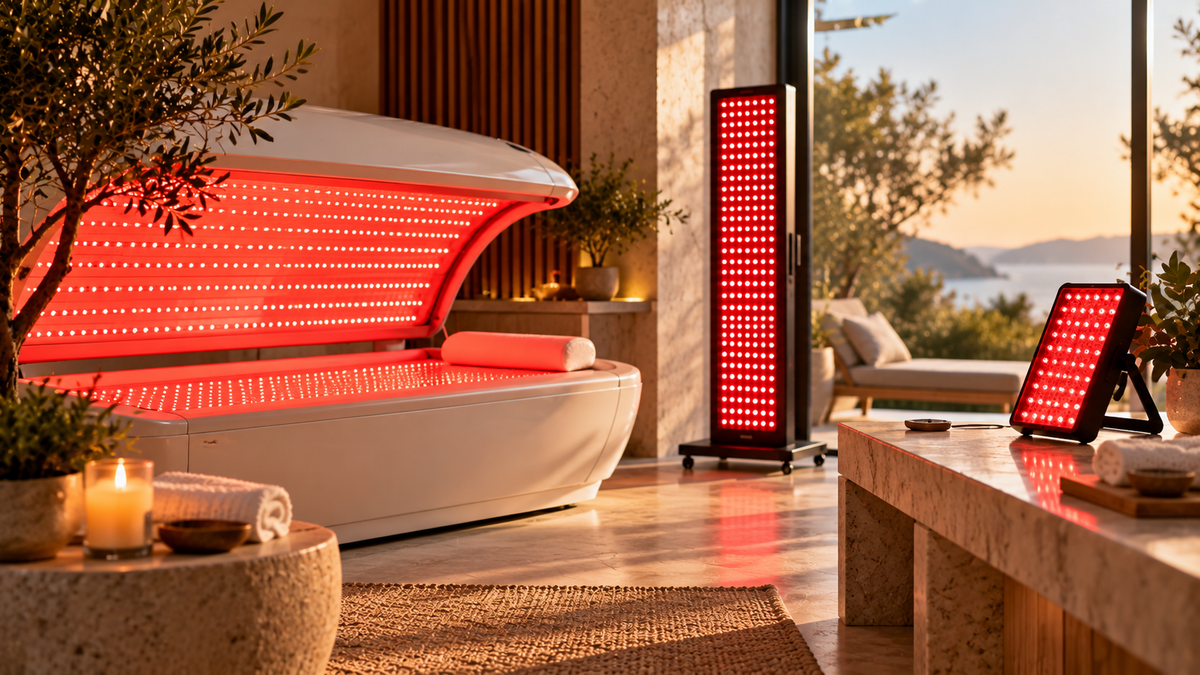
Two devices can look similar but perform very differently based on irradiance (power output at a given distance) and the physical size of the panel. A larger panel or full-body bed treats more surface area per session, while smaller pads and masks are suited to targeted, localized use — a specific joint, the face, or a smaller area.
Device types to consider
Panels are the most common full-body option and can be mounted or freestanding. Beds and blankets are designed for full-body, hands-free sessions. Masks and handheld pads are built for localized, targeted use — the face, hands, or a specific muscle group. Your choice largely comes down to whether you want full-body coverage or targeted treatment.
What to check before buying
Look for listed wavelengths (not just "red light" as a category), irradiance specs, session timer functionality, and whether the device is FDA-registered as a Class II medical device — this is a baseline safety and manufacturing standard worth confirming for any device you're considering.
For more guidance, see our tips on choosing a red light therapy bed, picking the right panel for your space, and building a consistent red light therapy routine.
Browse our full range of red light therapy devices, from targeted pads to full-body panels and beds, with financing available on eligible orders.
%20has%20become%20one%20of%20the%20most%20talked-about%20additions%20to%20home%20wellness%20routines,%20but%20the%20range%20of%20devices%20on%20the%20market%20%E2%80%94%20from%20small%20handheld%20pads%20to%20...)