Infrared Cardio Equipment for Home, Chosen Well
A hard training session does not always call for another high-output workout. Sometimes the most valuable hour is a measured walk, ride, or elliptical session in enveloping heat, away from the noise of a crowded club. Infrared cardio equipment for home brings that private ritual into the architecture of daily life, pairing low-impact movement with radiant warmth in a setting designed around your pace.
For high-performing households, this category is less about novelty than access. It creates a place to elevate the heart rate, work up a sweat, decompress after travel, and maintain a consistent movement practice without leaving home. The right model can feel as considered as a well-designed training studio: purposeful, comfortable, and ready when your schedule finally opens.
What Infrared Cardio Equipment Actually Is
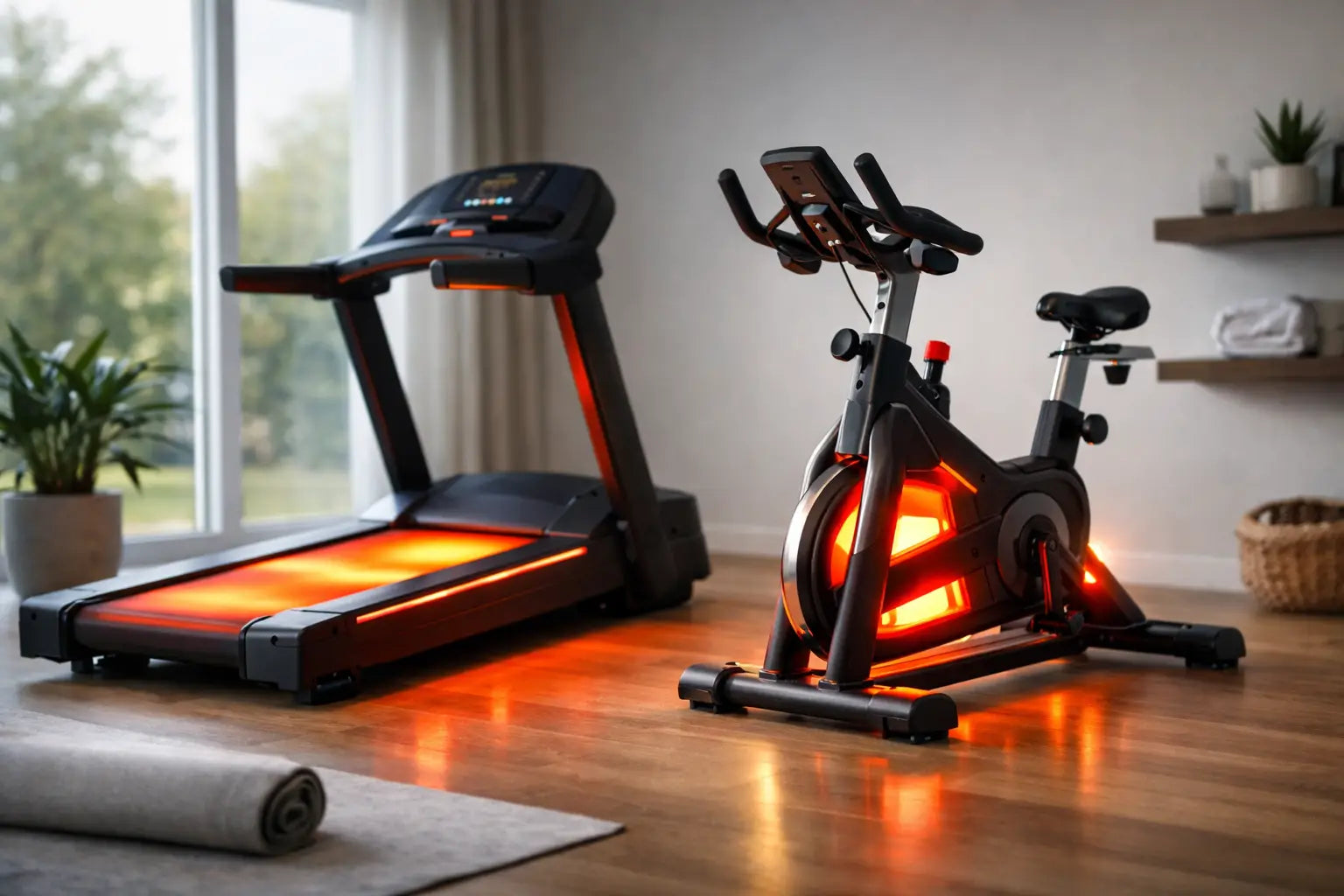
Infrared cardio equipment integrates a treadmill, elliptical, bike, or similar training modality into an enclosed or semi-enclosed heated environment. Infrared emitters warm the body and surrounding cabin more directly than a conventional space heater, while the cardio component provides controlled movement. Many systems include touchscreens, adjustable resistance or speed, ventilation, entertainment features, and built-in recovery-minded programming.
The experience is distinct from placing a treadmill in a warm room. An integrated unit is engineered to accommodate heat, perspiration, airflow, and repeated use. It also creates a more immersive boundary around the session. The room outside can remain calm and climate-controlled while the workout environment delivers focused warmth.
That distinction matters when specifying equipment for a primary residence, a wellness suite, or a hospitality amenity. A premium infrared cardio unit should feel intentional in both performance and finish, not like a standard exercise machine pushed into a sauna.
Why Heat and Steady Cardio Belong Together
Low-to-moderate intensity cardio is often the movement people can sustain most consistently. Walking on an incline, cycling at a conversational pace, or using an elliptical with controlled resistance can support daily conditioning without the recovery demands of maximal intervals. Add radiant heat, and the session becomes a compelling transition between training and restoration.
The appeal is partly physical and partly behavioral. Heat can make a gentle session feel more satisfying, particularly on mornings when motivation is low or on days when the body is not asking for impact. The enclosed setting also removes many distractions. There is no commute, no shared equipment, and no pressure to match anyone else’s pace.
It is not a replacement for strength training, outdoor endurance work, or properly programmed recovery. Nor should heat be treated as a shortcut to fitness. Conditioning still responds to consistency, progressive challenge, and adequate rest. What infrared cardio can offer is a refined setting that makes regular movement easier to keep.
Choosing Infrared Cardio Equipment for Home
The best choice begins with how you will actually use it. A serious runner may want a treadmill that supports a confident stride and meaningful incline range. Someone prioritizing joint-conscious daily movement may prefer the smooth, upright posture of an elliptical. A bike can be an excellent fit for compact wellness rooms and for users who want a highly adjustable, lower-impact option.
Start with your preferred pace
Be honest about the sessions you will repeat. If your ideal ritual is a 30-minute walk while listening to a briefing or a favorite album, prioritize deck comfort, intuitive controls, and a cabin that does not feel restrictive. If you are building aerobic capacity with structured intervals, look closely at the equipment’s speed, resistance, programming, and cooling capabilities.
The heat setting deserves equal attention. More is not automatically better. A system with responsive controls allows each user to find a comfortable range, and it makes the equipment more versatile across a household. Beginners may prefer a gentler setting and shorter sessions, while experienced users may build duration gradually.
Measure the room beyond the machine footprint
Luxury equipment must have room to perform and room to belong. Account for the fully assembled dimensions, door swing, ceiling clearance, service access, electrical placement, flooring, and circulation around the unit. A beautiful piece that overwhelms the room or leaves no space for entry and maintenance quickly loses its appeal.
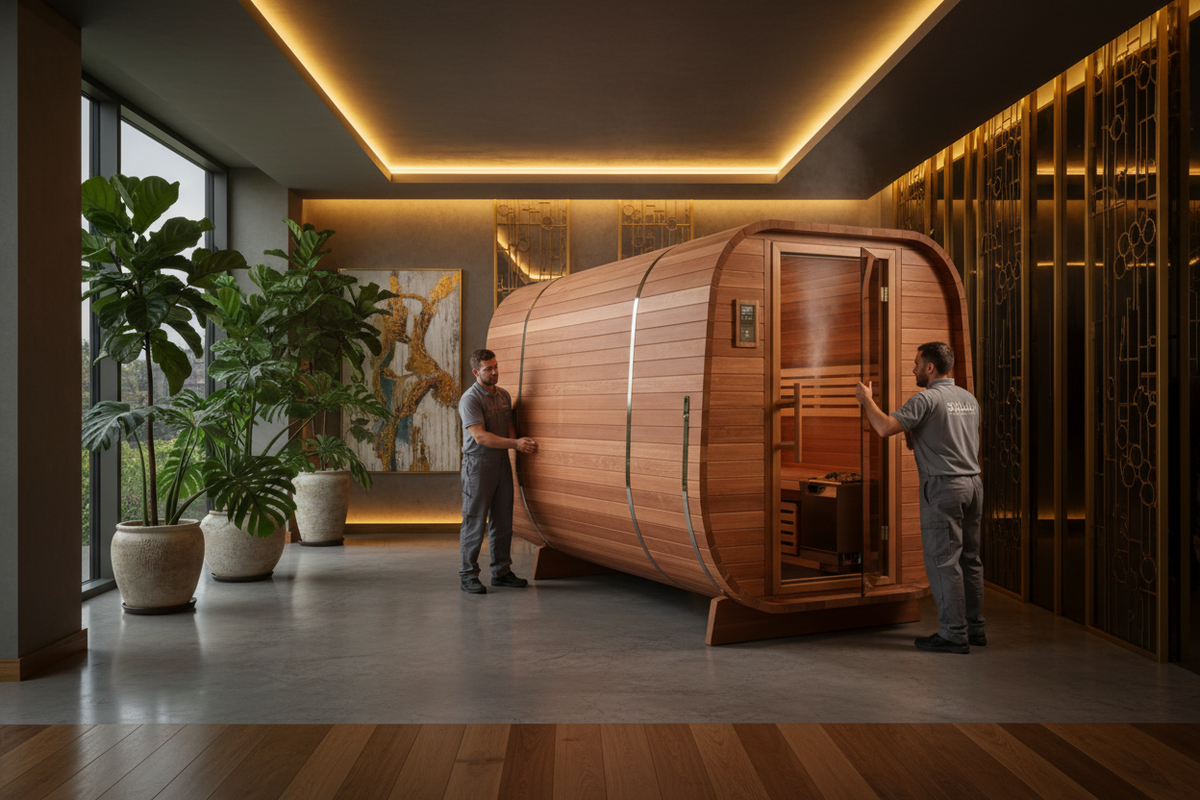
Weight is another consideration. Some infrared cardio systems are substantial, especially when installed above ground level. Confirm floor-load requirements early with the appropriate building professional. For condominium residences, also review delivery paths, elevator dimensions, building rules, and approved installation windows before selecting a model.
Prioritize construction, airflow, and user comfort
Look for commercial-quality cardio components, durable cabin materials, thoughtfully placed heaters, and an interface that remains easy to operate during a warm session. Ventilation is not a secondary feature. It influences comfort, equipment longevity, and how often you will want to use the unit.
Small details create the elevated experience: a secure device shelf, accessible hydration storage, ergonomic handrails, easy-clean surfaces, and a seat or support option where appropriate. In a dedicated recovery environment, lighting and adjacent finishes matter too. The equipment should work with the room’s palette rather than dominate it.
Build the Session Around Intent, Not Exhaustion
A strong infrared cardio ritual is often more restrained than people expect. Begin with five to 10 minutes at an easy pace and a moderate temperature. Let your body settle into the environment before increasing incline, resistance, or heat. Hydration should be close at hand, and ending the session before you feel depleted is good judgment, not a missed opportunity.
For a morning reset, a measured 20- to 30-minute walk can provide a quiet runway into the day. After a demanding travel schedule or strength session, a low-resistance ride may be more appropriate than high-intensity intervals. On a weekend, an extended easy session can become a screen-free space to think, breathe, and reconnect with your physical baseline.
People who are new to heated exercise should be especially conservative. Heat tolerance varies based on fitness, hydration, medications, alcohol use, sleep, and health history. Stop if you feel dizzy, nauseated, faint, or unwell. Anyone who is pregnant or managing cardiovascular, blood pressure, or other medical conditions should seek personalized guidance from a qualified clinician before beginning heated exercise.
Make It Part of a Complete Home Wellness Suite
Infrared cardio delivers its greatest value when it has a clear role in the wider environment. It may sit near a traditional or infrared sauna for a separate heat session, a cold plunge for users who enjoy contrast routines, or a red light and recovery space designed for calmer evenings. These modalities do not need to be used all at once. A well-planned sanctuary gives you options without turning recovery into another obligation.
For example, a performance-focused suite might place infrared cardio near strength equipment and compression therapy, with a shower and hydration station close by. A more restorative residence may feature a quiet heated cardio unit in a private spa room, followed by a massage chair or dedicated relaxation area. The most successful layouts honor both utility and atmosphere.
Luxe Vida Wellness approaches these environments as complete systems, with premium equipment selection, custom sourcing, and coordination that respects the realities of delivery, setup, and design intent. For a substantial residence or commercial project, early planning with the architect, designer, and installation team can protect the visual integrity of the space while addressing power, access, ventilation, and service needs.
The Investment Question: What Are You Really Buying?
Premium infrared cardio equipment commands more than a conventional home treadmill or bike because it combines specialized heating technology, a built-in enclosure, significant materials, and a more complex installation profile. The better question is whether it earns a regular place in your routine.
For someone who rarely uses cardio at home, a beautiful machine alone will not create consistency. In that case, a simpler movement setup and a separate sauna may offer greater flexibility. But for the person who values privacy, enjoys heat, and wants an all-weather wellness ritual available before work or after dinner, the integrated experience can be exceptionally compelling.
Consider serviceability as carefully as aesthetics. Confirm warranty coverage, electrical requirements, assembly expectations, and the availability of delivery coordination. White-glove planning is particularly valuable when equipment must move through finished interiors, narrow access points, or multi-level homes. Premium ownership should feel considered from selection through installation, not complicated after the purchase.
The right unit is the one that invites you back tomorrow: warm, composed, and ready for the kind of movement that strengthens your standard without consuming your day.