Luxury Home Sauna Installation Done Right
A luxury home sauna installation is not simply a beautiful cabin placed in an available corner. It is a daily recovery ritual built into the architecture of your life - a private environment where heat, quiet, and intentional design support better sleep, clearer focus, and stronger physical recovery. When the planning is right, the sauna feels as natural to your home as a primary suite or an exceptional kitchen.
The distinction matters. Premium sauna equipment can only perform at its best when the room, power, ventilation, materials, and circulation around it have been considered together. The goal is not to create a showpiece that is used occasionally. It is to create a sanctuary that makes restoration the standard.
Start With the Ritual, Not the Floor Plan
Before choosing a sauna model, decide how you want the space to serve you. A traditional sauna may be the centerpiece of a post-training routine, shared with a partner or family after a long day. An infrared sauna may fit a shorter, more frequent wellness practice, especially for homeowners prioritizing gentle radiant heat, relaxation, and convenience. A hybrid configuration can be compelling for clients who want both experiences without compromise.
This decision shapes nearly every installation choice. Traditional saunas are designed to heat the air and stones, creating the enveloping, high-temperature experience many enthusiasts associate with Nordic bathing culture. They generally demand more attention to heater clearance, electrical requirements, room construction, and ventilation. Infrared models use radiant panels to warm the body more directly at lower ambient temperatures. They can be an excellent fit for an interior wellness room, primary-suite retreat, or dedicated recovery studio where ease of use is central.
Think beyond the cabin itself. Will you step from the sauna into a cold plunge? Do you want a rain shower nearby? Should the room include a chaise, hydration station, red light therapy, or a place to sit quietly between rounds? The finest home wellness environments have a sense of sequence. Heat, cool, rest, repeat. Strength and serenity exist in harmony.
Choose a Location That Supports Daily Use
The best location is usually not the largest empty room. It is the place you will realistically use at 6 a.m., after travel, or at the end of a demanding day. For many homes, that means a primary-suite wellness room, a home gym, a finished lower level, or a pool house. For others, an outdoor sauna creates a more immersive destination and an ideal pairing with a cold plunge.
Indoor installations offer privacy and year-round convenience. They also require careful review of access, ceiling height, electrical service, ventilation, and the surrounding finishes. A basement can be ideal if it is dry, insulated, and served by appropriate mechanical systems. An upper-floor installation can work beautifully, but the project team should confirm floor loading, pathway access, and the route for electrical work before equipment is ordered.
Outdoor installations create more flexibility in footprint and can turn a terrace, garden, or pool area into a resort-caliber recovery zone. They do, however, require a durable foundation, weather-rated construction, drainage planning, and a clear strategy for cold-weather access. A sauna that is visually striking but inconvenient to reach in rain or snow may see less use than expected.
Electrical Capacity Is a Design Decision
Electrical planning is one of the least glamorous parts of luxury home sauna installation, yet it is where costly surprises often begin. A traditional electric heater commonly requires a dedicated 240-volt circuit, while an infrared sauna may require 120 volts or 240 volts depending on its size and panel configuration. Never assume an existing outlet or panel has the capacity needed.
Have a licensed electrician review the selected equipment's documented requirements, your home's available service, panel capacity, circuit run, disconnect needs, and applicable local code. If the sauna is part of a larger recovery suite with a cold plunge chiller, red light bed, cardio equipment, or compression station, assess the full electrical load at once. Coordinating the infrastructure early is more efficient than adding circuits after finishes are complete.
Control placement deserves equal attention. In a refined installation, controls should be convenient without interrupting the room's calm visual language. Consider whether you prefer controls inside the sauna, outside the entry, integrated with a smart-home system, or positioned near the recovery zone's main entrance.
Ventilation, Moisture, and Material Choices Define Longevity
Heat is only one part of the sauna environment. Proper air exchange supports comfort, heater performance, and the long-term condition of the room. Traditional sauna ventilation is not an afterthought. It should be planned according to the heater manufacturer's guidance, with intake and exhaust locations that encourage circulation without creating unpleasant drafts.
For indoor rooms, the surrounding envelope also needs thoughtful moisture management. This is especially true when the sauna sits near a shower, steam room, or cold plunge. A qualified installer can coordinate insulation, vapor control layers where required, drainage, and adjoining wall conditions so moisture is managed appropriately. Local building requirements and manufacturer instructions should guide every detail.
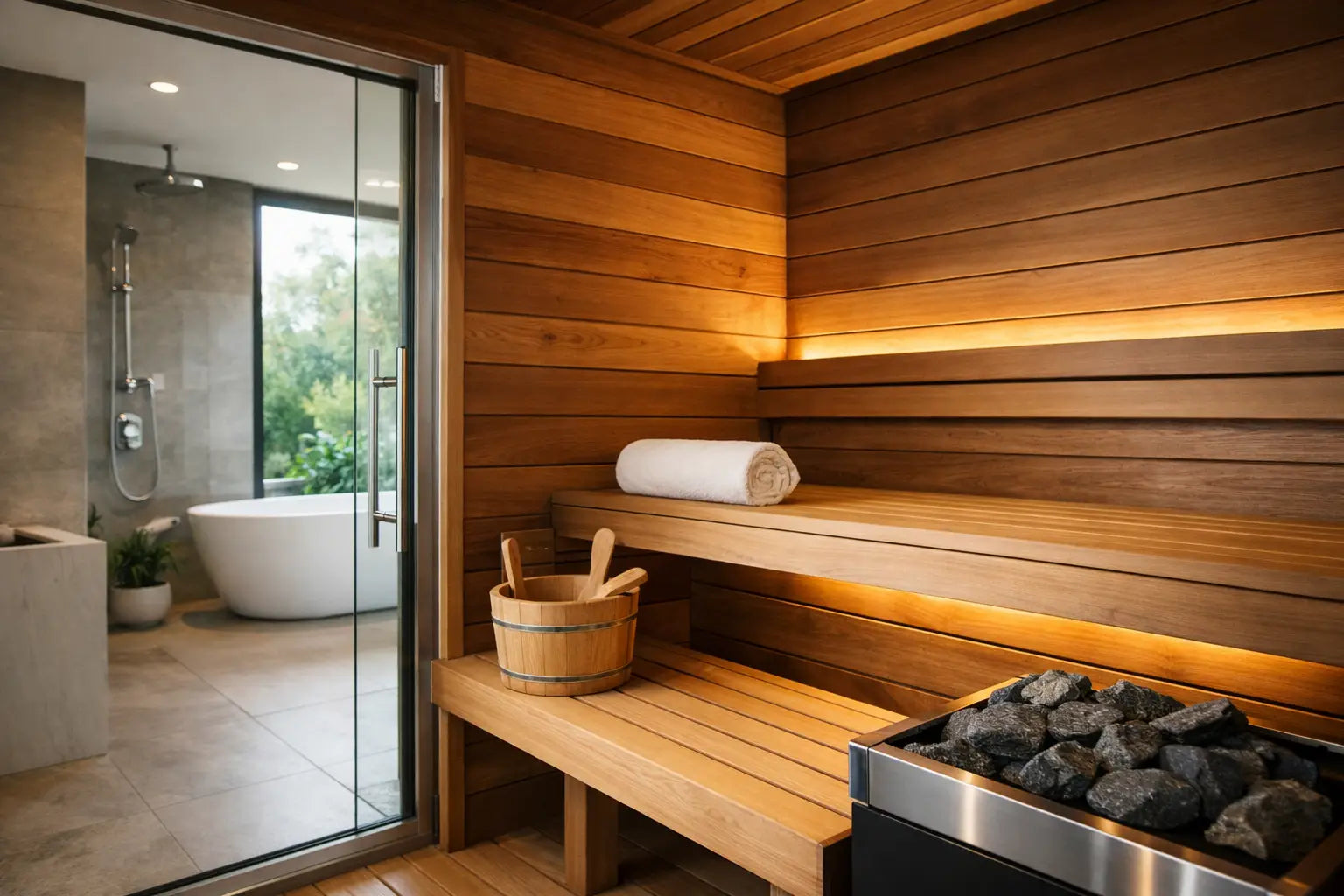
Inside the cabin, quality wood is both an aesthetic and functional choice. Species such as cedar, hemlock, alder, and aspen each create a different visual character and sensory experience. Cedar brings warmth and aroma. Hemlock offers a clean, contemporary appearance. Alder has a rich, tailored look. Aspen is often appreciated for its smooth feel and lower heat conductivity on benches.
Avoid treating the interior like a standard wood-paneled room. Materials must be selected for high heat and repeated use. Benches should feel substantial and comfortable, with dimensions that allow users to recline or sit with ease. Premium lighting should flatter the wood grain while remaining soft enough to preserve the restorative atmosphere.
Design the Sauna as Part of a Complete Wellness Suite
A standalone sauna can be exceptional. A sauna considered within a complete recovery environment can become transformative. This is where design discipline creates a more valuable outcome than simply adding more equipment.
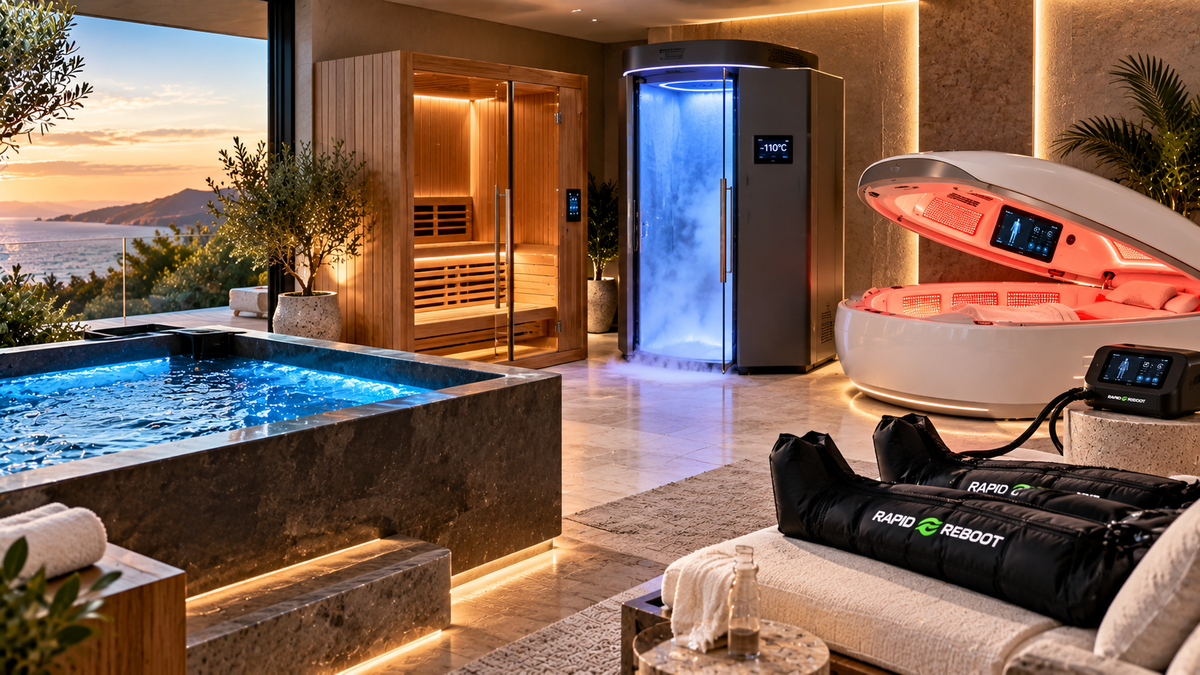
Place the sauna near the modalities that support the way you recover. Serious athletes may prioritize a cold plunge and compression boots. Executives managing stress and sleep may prefer a quieter sequence of infrared heat, red light therapy, and a dedicated relaxation area. A hospitality or residential-development project may need multiple-user capacity, commercial-grade durability, intuitive controls, and an experience that photographs as beautifully as it performs.
The transitions matter. Use non-slip flooring in wet zones. Include towel storage within reach. Make room for a robe hook, water, and seating. Consider acoustics, whether that means discreet sound integration or meaningful silence. These details are not decorative extras. They remove friction from the ritual, making it more likely that recovery happens consistently.
Luxe Vida Wellness approaches these projects as tailored wellness environments, coordinating premium equipment choices with the room's intended use, finish level, delivery requirements, and installation path. That level of curation is particularly valuable when a sauna is one component of a larger sanctuary rather than an isolated purchase.
Know When Prefabricated or Custom Is the Better Choice
A high-end prefabricated sauna can be the right answer when you want dependable performance, a defined footprint, and an efficient installation timeline. Many premium units offer sophisticated glass detailing, integrated lighting, low-EMF infrared technology, and elegant interior finishes without requiring a fully built-in construction project. They are particularly appealing for homeowners who want a contained solution with less disruption.
A custom sauna is worth considering when the architecture calls for a precise fit, unusual dimensions, bespoke materials, or a distinctive visual statement. It can be designed around a view, integrated into millwork, or configured to support several guests comfortably. Custom work also allows more freedom with bench geometry, glass walls, lighting scenes, heater placement, and adjoining shower or plunge areas.
The trade-off is straightforward: customization provides greater design control, but it also requires more coordination among the designer, contractor, electrician, mechanical team, and sauna specialist. Begin specifications before the room is framed whenever possible. Retrofitting a sauna into a finished space is possible, but it may limit options and increase project complexity.
Build the Installation Team Before Delivery Day
Even the finest sauna can be undermined by a rushed delivery or unclear scope of work. Confirm who is responsible for site measurements, freight receiving, access through the home, assembly, electrical connection, ventilation, finish work, and final testing. For outdoor projects, clarify foundation preparation, weather protection, and site access for delivery equipment.
A useful pre-installation review should account for four practical realities:
- The finished unit dimensions and the clearance required around it.
- Doorways, stairwells, elevators, turns, and any equipment needed to move components into place.
- Electrical, ventilation, drainage, and structural work completed before installation begins.
- The manufacturer's assembly, safety, and warranty requirements.
Make the First Session Feel Effortless
Once the sauna is installed, set it up for use rather than display. Stock quality towels, place a water source nearby, and create a simple routine you will return to. Traditional sauna users may keep a bucket and ladle ready if their heater and local installation guidance allow water on the stones. Infrared users may favor a quiet playlist, breathwork, or a brief stretching sequence.
Start at a comfortable temperature and duration, especially if you are new to sauna bathing or returning after time away. Hydrate before and after each session. Anyone with a medical condition, cardiovascular concern, pregnancy, or medication that affects heat tolerance should consult a qualified clinician before using a sauna.
A well-executed sauna does more than add an amenity to a luxury home. It gives your schedule a protected place for recovery. Plan it with the same care you would give any enduring investment, and the space will reward you not just with beauty, but with a ritual you are genuinely eager to keep.