Luxury Spa Design Trends That Define 2026
A beautiful sauna is no longer enough. The most compelling luxury spa design trends are shaping entire recovery rituals: spaces where heat, cold, light, sound, movement, and stillness work together with the discretion of a five-star private club. For homeowners, hospitality brands, and developers, the question is not which wellness device looks impressive on its own. It is how the room makes people feel before, during, and after they use it.
The new standard is personal, performance-minded, and deeply considered. A well-designed wellness space should make recovery feel effortless while carrying the visual restraint expected of a luxury residence, resort, or flagship fitness destination.
Luxury Spa Design Trends Are Becoming More Intentional
For years, spa design leaned heavily on surface-level signals: white marble, a water feature, a row of treatment rooms, and a quiet lounge. Those elements still have a place, but affluent clients now expect more from the square footage. They want an environment that supports sleep, stress regulation, circulation, training recovery, and long-term vitality without requiring a drive across town or an appointment on someone else’s schedule.
This shift has elevated the recovery suite. Rather than placing a sauna in one room and a cold plunge in another, designers are creating a defined progression: warm the body, introduce a purposeful cold exposure, rest, rehydrate, and return to the day feeling clear. The luxury lies in the choreography. When circulation, privacy, lighting, drainage, ventilation, and material selections are planned as one system, the experience feels calm rather than clinical.
This does not mean every project needs every modality. A city penthouse may be best served by a compact infrared sauna, a red light panel, and a recovery lounge. A large estate, destination spa, or athletic club may justify a traditional sauna, cold plunge, contrast shower, cryotherapy chamber, compression station, and dedicated relaxation space. The right program depends on the user, available infrastructure, and the rhythm of use.
Thermal Circuits Become the New Centerpiece
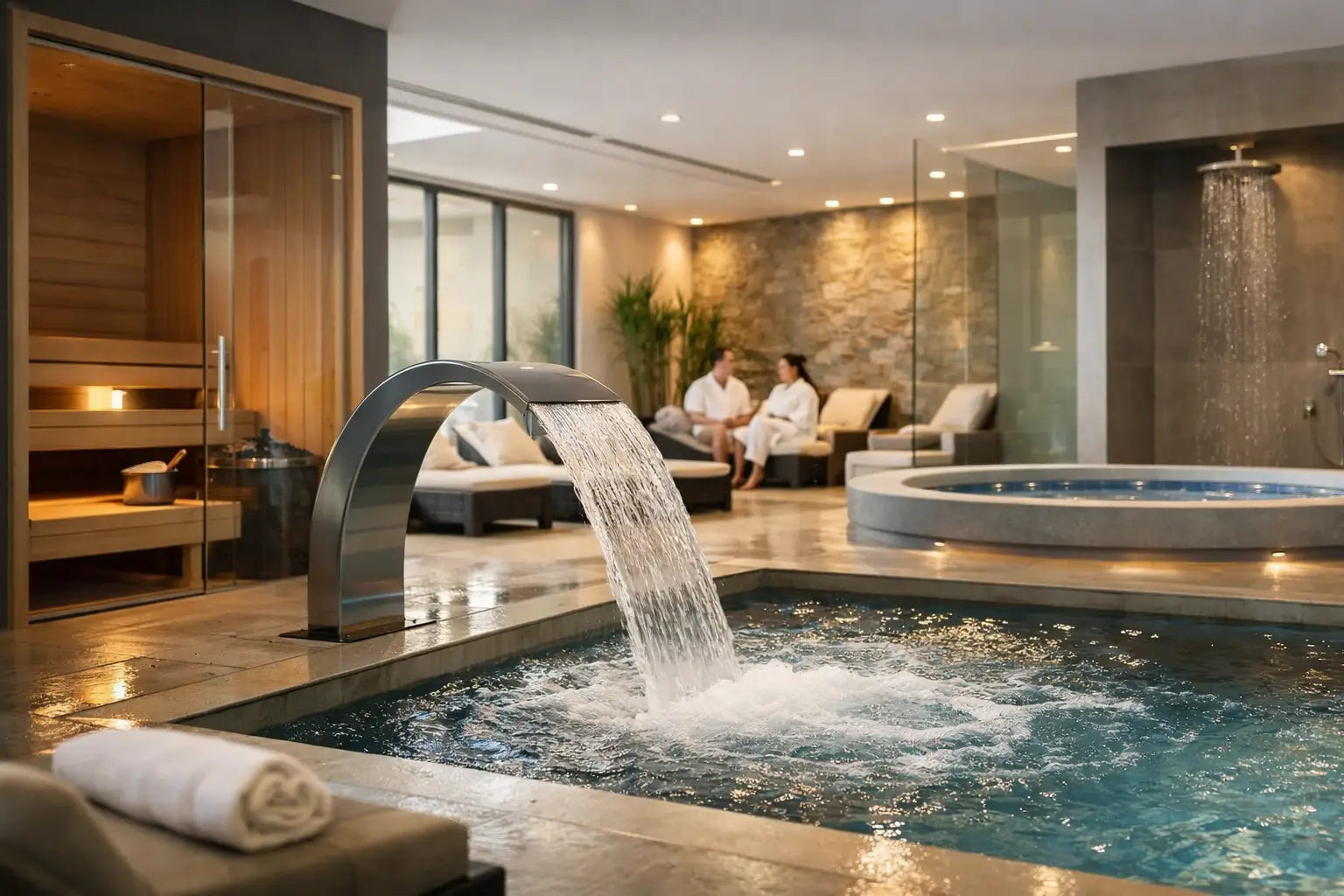
Contrast therapy continues to anchor premium wellness environments because it provides an immediate, memorable ritual. A sauna or steam experience followed by a cold plunge has a powerful sensory appeal, but it must be designed for more than the photo moment.
Sequence matters as much as equipment
The best spaces make the path intuitive. Users should not have to cross a public corridor, search for towels, or drip water over finished flooring to move from heat to cold. Locate the plunge close to the sauna, with a clear transition zone for a shower, towel storage, hydration, and seating. In commercial settings, consider whether guests need a separate area to cool down and reset before returning to a social space.
Material choices matter here. Stone, porcelain, sealed wood, textured tile, and high-quality metal details bring permanence, but slip resistance and maintenance must guide the final specification. A pale limestone look can create an elegant retreat, for example, yet a hard-working hospitality spa may need porcelain or another more forgiving finish in wet zones. Luxury is not a delicate surface that deteriorates under real use. It is a room that continues to perform beautifully.
The traditional sauna is being refined, not replaced
Infrared saunas remain popular for their approachable warmth, streamlined profiles, and easy integration into residential recovery rooms. Traditional saunas, meanwhile, are earning renewed attention for clients who value deeper heat, social ritual, and a more architectural experience. Custom millwork, concealed heaters, sculptural benches, and refined lighting can turn a traditional sauna into the emotional center of a wellness suite.
The decision is practical as well as aesthetic. Electrical capacity, ventilation, room volume, desired temperature, and frequency of use all influence the best choice. In larger projects, offering both can serve different preferences without compromising the integrity of the overall design.
Quiet Technology Is the Mark of Real Luxury
Recovery technology has become more sophisticated, but the room should not feel like a showroom. One of the strongest luxury spa design trends is the move toward equipment that integrates into the architecture rather than competing with it.
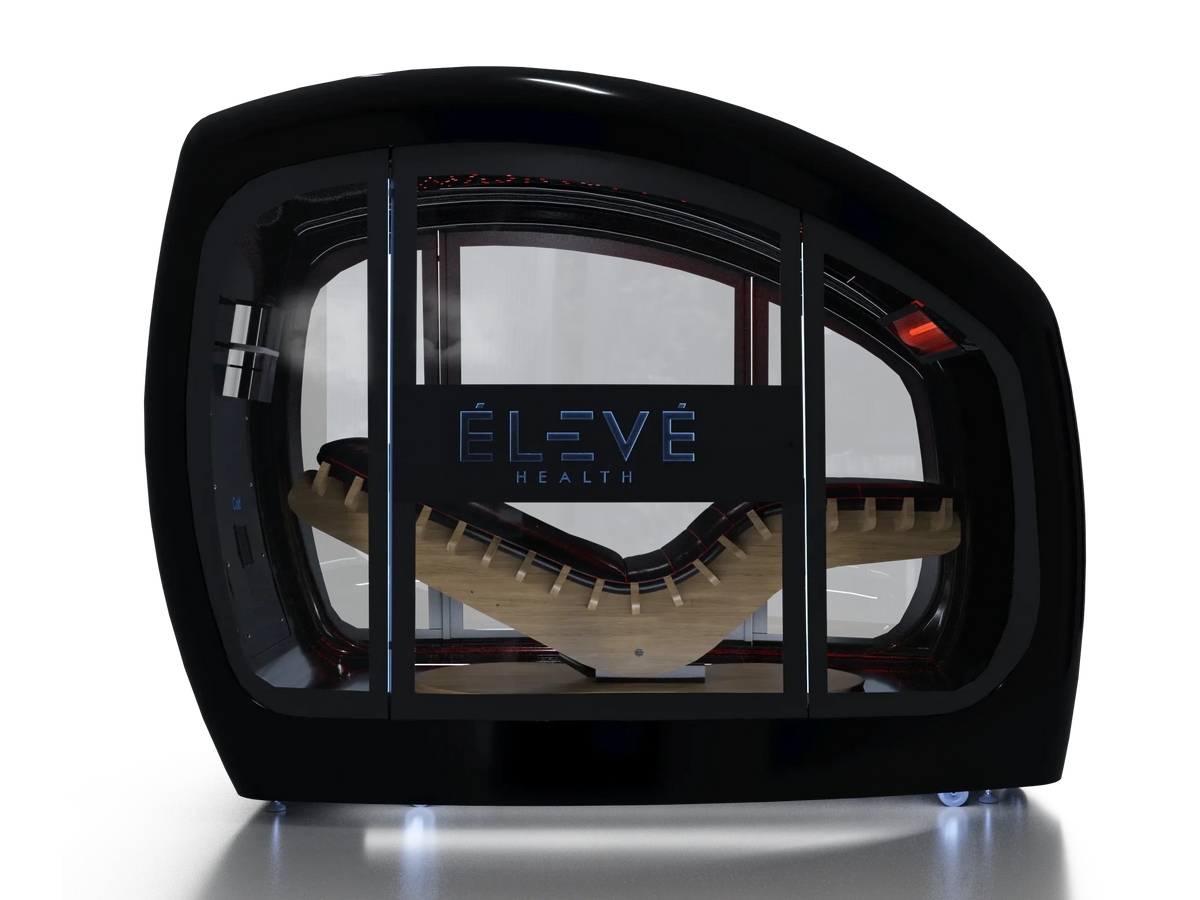
Red light therapy is a strong example. A panel or bed can offer a high-performance recovery modality, but its placement deserves intention. Set it within a dedicated alcove, a softly lit treatment room, or a private bedroom-adjacent sanctuary instead of placing it in an exposed corner. Add comfortable seating, a place for personal items, and controls that are simple to understand. The result feels like a considered ritual rather than another task on the calendar.
The same principle applies to PEMF equipment, compression boots, massage chairs, and body-contouring systems. These pieces should have adequate clearance, power access, and storage planned from the beginning. A recovery chair deserves a view, a reading light, and acoustic comfort. Compression therapy is more appealing when there is a tailored lounge chair, a side table, and a place to decompress between meetings or after training.
Concealed wiring, integrated charging, quiet mechanical systems, and layered lighting carry disproportionate impact. Bright overhead lighting can make even exceptional equipment feel transactional. Use dimmable ambient light for arrival, focused task lighting for treatment and grooming, and low-level guidance lighting for early mornings or evening recovery sessions.
Sensory Materiality Replaces the Generic Spa Look
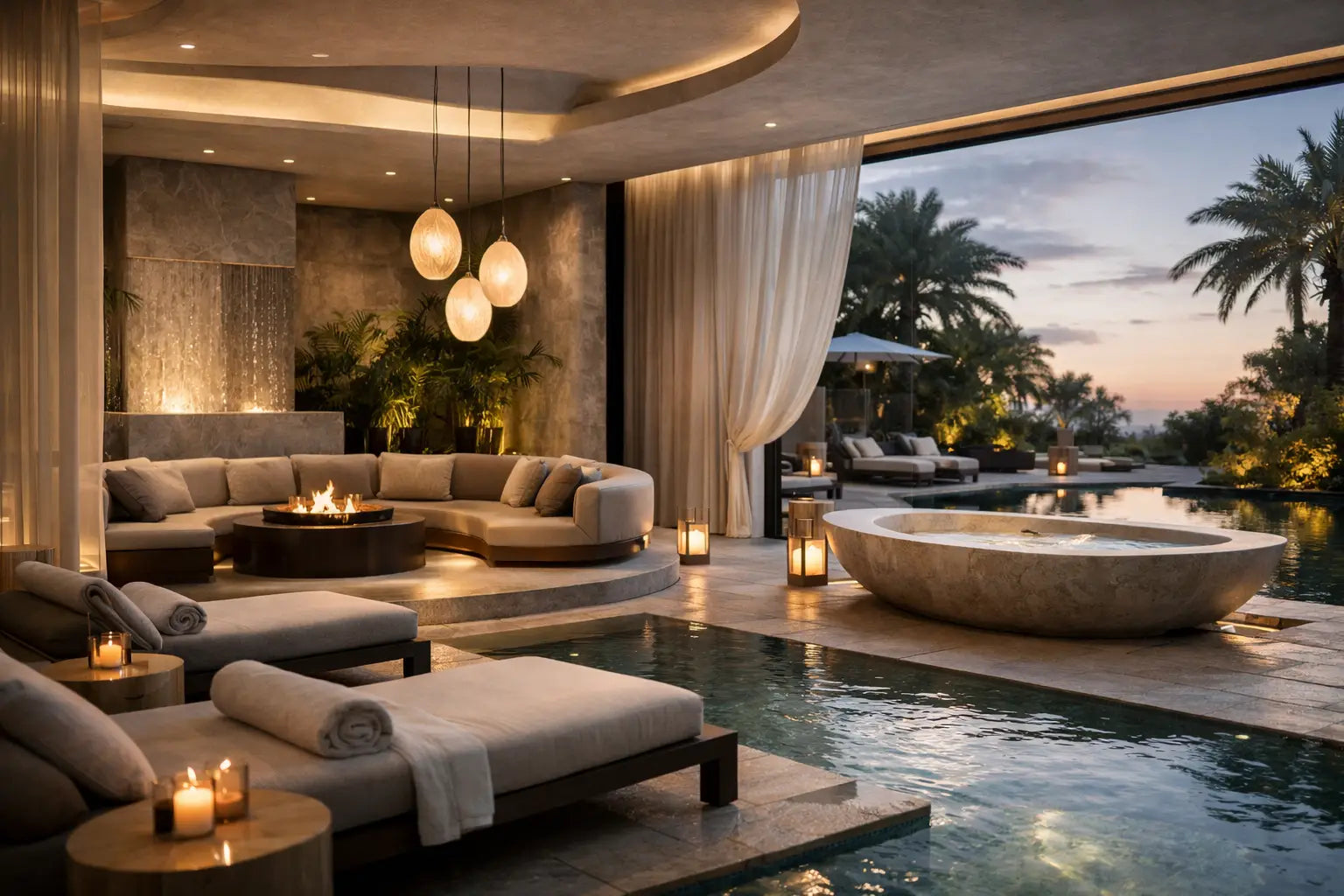
The luxury wellness space is becoming warmer, moodier, and more residential. Instead of relying on one universal spa palette, designers are using honest materials with depth: smoked oak, fluted stone, plaster walls, brushed bronze, ribbed glass, wool textiles, and tactile ceramics. These choices create a sense of refuge without copying a hotel lobby.
Natural materials need thoughtful detailing around moisture and heat. Wood species, sealants, substrate preparation, and ventilation should be selected for the environment, not only for the mood board. In a high-humidity steam area, the same finish that works beautifully in a dry meditation lounge may not be appropriate. This is where expert sourcing and installation coordination protect both the design intent and the investment.
Acoustics deserve equal attention. The hum of mechanical equipment, hard tile surfaces, and public circulation can quickly disrupt a restorative experience. Upholstered elements, acoustic plaster, insulated walls, and intentional sound control help create the sense of privacy high-performing clients value most. Silence, when it is designed well, is one of the rarest amenities.
Recovery Suites Are Replacing Single-Purpose Rooms
The modern wellness sanctuary is less compartmentalized. Rather than creating a room for every individual function, designers are building flexible zones around a complete recovery routine. A lounge can support breathwork, compression therapy, post-sauna relaxation, and quiet conversation. A movement room can pair infrared cardio equipment with red light therapy and space for mobility work.
For luxury residences, this integrated approach makes wellness easier to sustain. The suite becomes part of the home's daily rhythm, not a specialty room used twice a month. For hospitality and multifamily developments, it creates an amenity with a clear point of difference: guests and residents can access a polished, private recovery experience that supports how they actually live.
The trade-off is that multifunctional spaces require disciplined planning. Equipment dimensions, door clearances, electrical needs, flooring loads, drainage, and service access cannot be improvised after finishes are installed. Early coordination between the designer, architect, contractor, and wellness-equipment partner prevents costly revisions and protects the visual calm of the final room.
Designing for Privacy Is Designing for Repeat Use
The most successful high-end spa spaces offer choice. Some clients want a communal sauna ritual after a group workout. Others want to step from a home office into a private infrared session without being seen. A luxury project can accommodate both through zoning: social thermal areas, secluded treatment alcoves, private changing rooms, and quiet recovery lounges.
Privacy also means operational confidence. Users should know how to operate the equipment, where to place belongings, how to clean up, and whom to contact if service is needed. White-glove delivery, professional setup coordination, warranty coverage, and clear handoff support may not appear in the finished photographs, but they shape the ownership experience long after installation day.
At Luxe Vida Wellness, this is the difference between collecting premium equipment and creating a complete wellness environment. The goal is strength and serenity in harmony, with every piece selected for the space, the lifestyle, and the standard it is meant to uphold.
A well-designed spa does not ask people to escape their lives to recover. It gives them a more refined way to return to them. Start with the ritual you want to make non-negotiable, then build the sanctuary around it.
Every recovery suite in this piece started as a plan, not a purchase. If you're ready to design one for your home, property, or wellness brand, request a quote and we'll help you translate the vision into the right equipment, layout, and finish.