Commercial Wellness Installation That Performs
A hotel guest steps out of a long-haul flight, a resident finishes a demanding workday, or an athlete leaves a training session with the same expectation: recovery should be available without friction. A commercial wellness installation turns that expectation into a differentiated experience - but only when the equipment, room design, building systems, and operating model are planned as one.
For hospitality groups, developers, spas, and performance facilities, the opportunity is larger than adding a sauna beside the fitness center. A considered wellness environment can create a reason to book, join, return, and recommend. It can also become an operational burden if the project is specified around a product catalog rather than the reality of the space. The standard should be world-class hospitality, supported by equipment chosen to perform for years.
Commercial Wellness Installation Starts With the Guest
The strongest projects begin with a precise question: who will use this space, and what should they feel when they leave it? The answer changes the installation.
A boutique hotel may need a compact thermal circuit that helps travelers decompress in 30 to 45 minutes. A luxury multifamily property may prioritize an all-day amenity where residents can build a private recovery ritual into their routine. An athletic club may need high-throughput tools that address post-training soreness, circulation, and mobility. A destination spa can support longer, guided treatments with more theatrical design and a higher level of staff interaction.
These are different environments, even when they include similar modalities. A red light therapy bed in a members-only longevity lounge serves a different purpose than a red light panel in a treatment room. A cold plunge intended for contrast therapy requires a different guest flow than one designed as a visual centerpiece beside a pool deck.
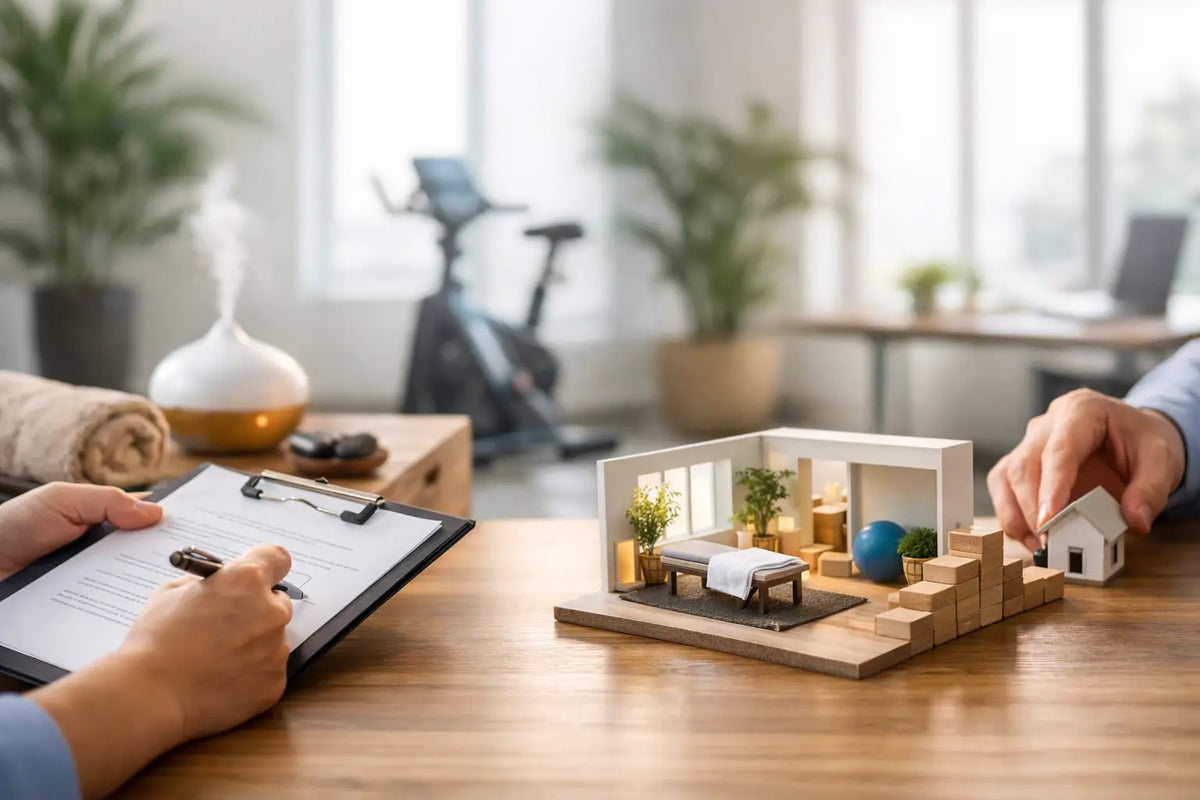
This is why a commercial wellness installation should be programmed before it is purchased. Determine the anticipated daily use, session length, privacy needs, staffing level, accessibility requirements, and desired revenue model. Equipment follows the experience, not the other way around.
Build a Recovery Circuit, Not a Collection of Machines
Premium wellness spaces feel intentional because each modality has a role. Heat can encourage relaxation and prepare the body for a contrast sequence. Cold exposure can support an invigorating recovery ritual. Red light therapy, compression, PEMF, and massage can create lower-intensity recovery options for guests who do not want a thermal session. The goal is not to display every available technology. It is to give people a clear, comfortable path through the room.
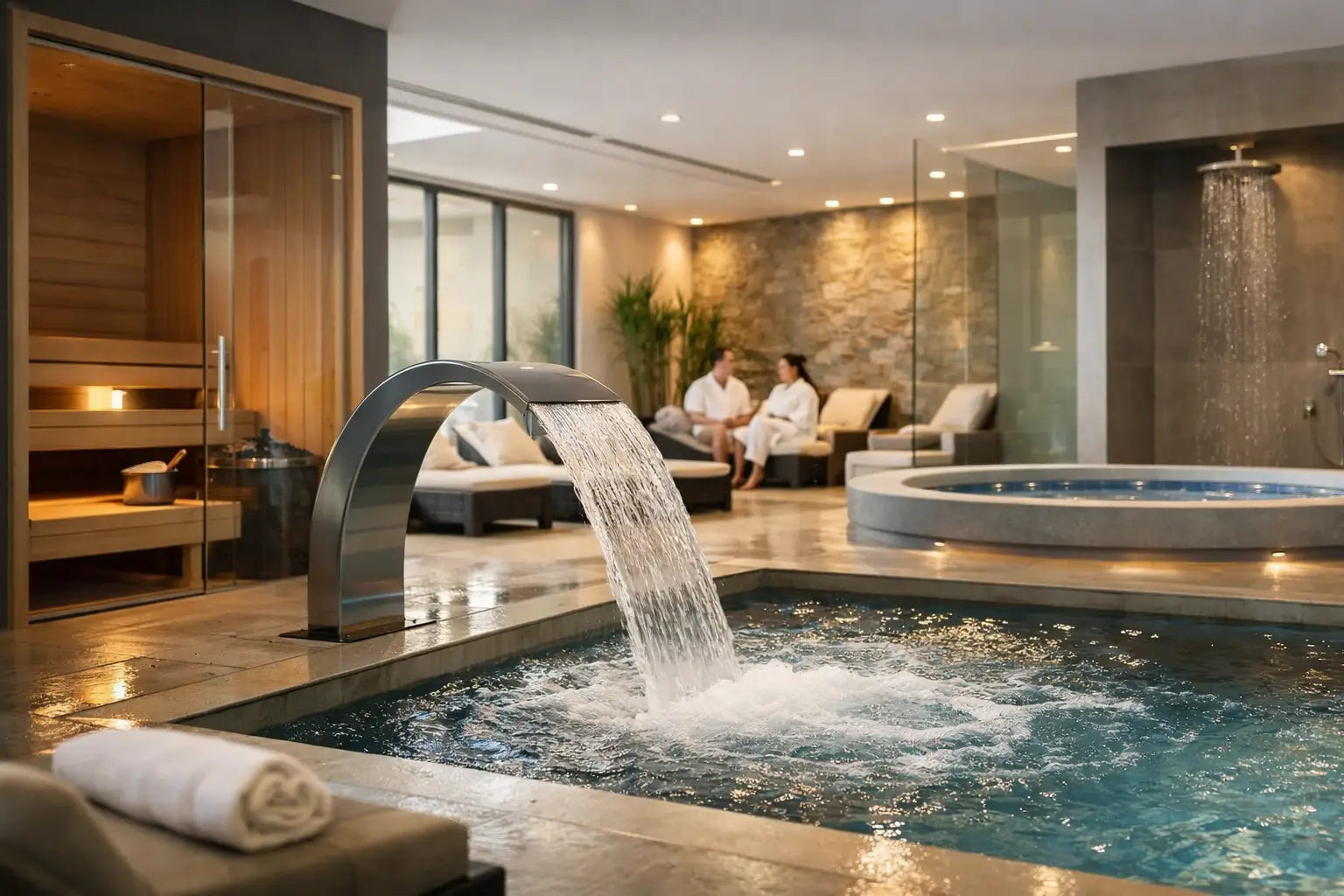
For a compact commercial footprint, a traditional or infrared sauna paired with a commercial-grade cold plunge and a red light therapy station may create a complete, high-value ritual. A larger club or hospitality project can expand with recovery loungers, compression boots, massage chairs, cryotherapy, or dedicated treatment suites.
There is a trade-off between range and clarity. More modalities may broaden the audience, but every addition consumes space, capital, staff attention, and maintenance capacity. An underused cryotherapy chamber is not more luxurious than a well-designed recovery suite that guests use every day. The right mix is the one that earns repeat engagement while protecting the visual calm of the environment.
Design for the Transition Between Modalities
Recovery is experienced in the transitions. Guests need a place to cool down after heat, set down a robe, hydrate, sit quietly, and reset before reentering a busy hotel, club, or residential common area. This calls for more than equipment clearances.
Plan for circulation that feels intuitive, slip-resistant flooring where water is present, appropriate drainage, towel storage, discreet sanitation supplies, and lighting that shifts the mood without compromising safety. Acoustic control matters as well. A cold plunge zone should not feel exposed to a crowded gym floor, and a red light room should not be interrupted by hallway traffic.
Luxury in every ray is not only about the red light device. It is about the room around it: the door closure, the wall finish, the temperature, the privacy, and the confidence that everything is ready when the guest arrives.
Technical Coordination Is Part of the Experience
A beautiful rendering cannot overcome an overlooked electrical load or a poorly planned water connection. Commercial wellness equipment often has significant requirements for power, ventilation, floor loading, plumbing, drainage, humidity management, delivery access, and service clearances. Those requirements should enter the project conversation early, alongside millwork, finishes, and lighting.
Saunas may require dedicated electrical service and careful ventilation planning. Cold plunges can involve water supply, drainage, water-treatment protocols, and a strategy for humidity. Whole-body cryotherapy requires a level of site planning and safety consideration that is very different from a plug-in recovery chair. Heavy equipment may need verification of floor capacity, particularly in upper-level amenity spaces or retrofitted properties.
The practical question is not simply whether a product fits through the door. It is whether it can be delivered, installed, accessed for service, and operated safely without compromising the architecture around it.
This coordination is where project support has real value. Architects and designers protect the aesthetic vision. General contractors protect the build schedule. Operators protect the guest experience after opening. A capable wellness partner helps translate equipment requirements among all three, with custom sourcing, specification guidance, freight coordination, white-glove delivery, and installation planning aligned to the project timeline.
Choose Commercial-Ready Equipment, Not Residential Shortcuts
A residential product can be excellent in a private home and still be the wrong choice for a hospitality or club setting. Commercial environments introduce more frequent use, varied users, tighter turnaround, cleaning demands, and greater expectations around warranty and service.
Before selecting equipment, evaluate the duty cycle, finish durability, controls, sanitation process, manufacturer warranty, replacement-part availability, and service pathway. Ask how the equipment behaves when used back-to-back throughout the day, not only during a single demonstration. Consider who will reset it between sessions and what happens when a guest needs assistance.
A premium installation also needs a visual standard that survives real operation. Porous materials, delicate finishes, and complicated interfaces can look exceptional at opening, then become difficult to maintain. The best commercial selections balance tactile luxury with practical resilience. Strength and serenity exist in harmony when the space remains as composed on a busy Saturday as it did on opening day.
Staffing Changes the Right Specification
Some concepts are designed for self-guided use. Others depend on attendants, therapists, or trained recovery staff. Neither model is inherently better, but each affects the equipment selection and room layout.
Self-guided amenities benefit from intuitive controls, direct wayfinding, clear session guidance, and modalities with manageable reset procedures. Staffed spaces can support more personalized protocols, more complex equipment, and higher-touch service. If the team will be small or shared with another department, avoid building an experience that requires constant intervention to function properly.
Measure What Makes the Amenity Valuable
Wellness is often treated as a soft amenity, yet the best commercial projects are built with clear business intent. A hotel may monitor bookings tied to wellness packages, guest satisfaction comments, and repeat stays. A residential developer may track tours, lease velocity, resident retention, and amenity utilization. A club may measure member visits, recovery-service revenue, and the conversion of training clients into wellness users.
Usage data should also shape the physical plan. If compression and massage are booked continuously while a larger thermal zone sits quiet during certain hours, programming may need adjustment. If guests routinely arrive in pairs, a solo-only layout may be leaving value on the table. Equipment can be exceptional and still need a better reservation policy, staff introduction, or bundled experience.
The most successful spaces do not present recovery as an intimidating technical exercise. They make it a ritual people understand. A simple contrast circuit, a post-flight reset, a 20-minute performance recovery session, or an evening sleep-support routine gives guests a reason to use what has been installed.
A Higher Standard for the Finished Space
Commercial wellness projects carry a particular responsibility: they represent the property every day, often in the moments when guests most want to feel cared for. That requires more than selecting prestigious equipment. It requires disciplined planning from the first layout review through final delivery, setup, staff orientation, and warranty support.
Luxe Vida Wellness approaches these environments as complete recovery destinations, with equipment curation and project coordination designed around the space, the user, and the operational reality behind both. The result should feel effortless to the guest because it was thoughtfully managed behind the scenes.
When the room is planned with equal respect for performance, design, and service, it becomes more than an amenity. It becomes a reason for people to choose your property when they decide where their health, time, and standards belong.
Ready to Build a Commercial Wellness Space That Performs
Whether you're planning a boutique hotel amenity, a residential recovery lounge, or a full-scale performance facility, the right installation starts with a conversation about your space, your guests, and your operational reality. Luxe Vida Wellness works directly with hospitality groups, developers, spas, and performance facilities to specify, source, and coordinate commercial-grade equipment built to perform under real, daily use.
Request a Quote to start planning your installation with our team.