
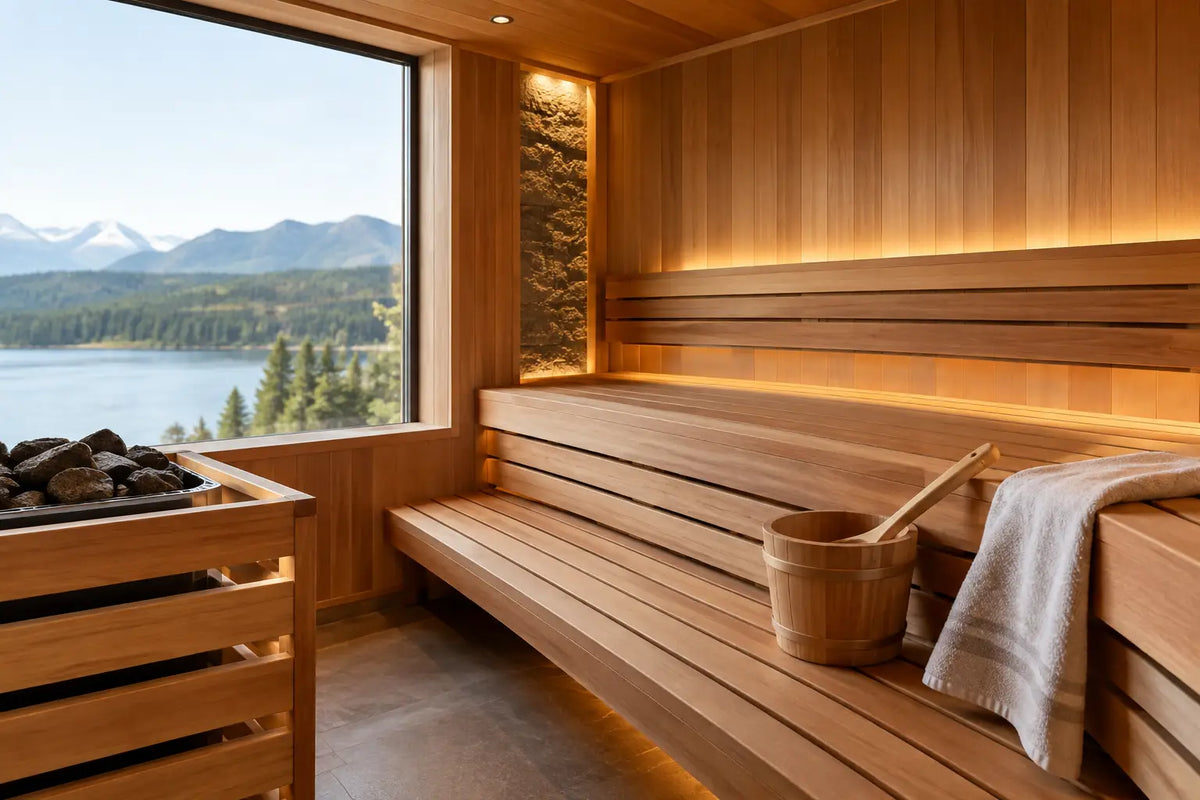
Best Luxury Sauna Materials for a Lasting Sanctuary
A luxury sauna should feel considered at every point of contact: the warmth beneath your hand, the scent of the cabin, the comfort of the bench, and the quiet confidence that it will still look exceptional years from now. The best luxury sauna materials are not necessarily the rarest or most expensive. They are the materials selected for the way they perform under heat, humidity, daily use, and close scrutiny.
For a private recovery suite, a hospitality spa, or a residential wellness sanctuary, material choices determine more than appearance. They shape thermal comfort, maintenance demands, indoor air quality, and the character of the ritual itself. A beautiful cabin with the wrong wood, hardware, or wall assembly can quickly feel like a design compromise. The right specification creates strength and serenity in harmony.
What Defines the Best Luxury Sauna Materials?
A premium sauna is a high-heat environment, so the materials must do more than photograph well. Interior woods should remain comfortable to touch, resist excessive movement as temperatures change, and avoid resin bleed. It should also suit the intended experience: a traditional sauna with higher heat and steam exposure has different demands from a lower-temperature infrared sauna.
Visual consistency matters, but it should not be the only criterion. Tight, even grain can create a refined architectural look, while a more expressive wood can bring warmth and a sense of retreat. The best choice depends on whether the sauna is meant to disappear into a minimalist home gym, anchor a dramatic spa suite, or complement a mountain, coastal, or contemporary interior.
For most luxury projects, start with the interior wood species, then specify the benches, wall structure, glass, flooring, insulation, vapor control, and hardware as one integrated system. This is where a sauna becomes an environment rather than a box with a heater.
The Best Woods for Luxury Sauna Interiors
Western Red Cedar: Rich Character and Natural Resilience
Western red cedar remains one of the most recognizable choices in premium sauna design. Its warm red-brown variation, distinctive aroma, and natural resistance to moisture-related deterioration give it immediate presence. It is also relatively lightweight and has low thermal conductivity, so wall and ceiling surfaces remain comfortable in use.
Cedar is particularly compelling for clients who want their sauna to feel immersive and organic. Its scent becomes part of the sensory experience, which many traditional sauna enthusiasts value. However, that fragrance is a preference, not a universal advantage. For users sensitive to aromatic woods, or for interiors built around a pale, restrained palette, cedar may feel too visually or aromatically pronounced.
Select clear-grade cedar for a more tailored finish with fewer knots. Knotty cedar has rustic appeal, but it can read more casual and may not suit an elevated, contemporary wellness room.
Hemlock: Calm, Clean, and Architecturally Versatile
Hemlock offers a lighter, more uniform appearance than cedar, with a subtle grain that works exceptionally well in modern interiors. It is generally low in resin and odor, making it a strong option for homeowners who want the experience of natural wood without a dominant fragrance.
In luxury infrared saunas, hemlock is often an excellent fit because it creates a clean visual field around the heaters and glazing. It can also be specified in traditional sauna environments when properly constructed and maintained. While it does not offer cedar's same natural decay resistance, its stable character and refined appearance make it a favorite for design-led installations.
Hemlock is a smart choice when the surrounding space features stone, plaster, brushed metal, or dark glass. It does not compete with those materials. It lets the architecture breathe.
Alder: A Refined, Warm-Toned Alternative
Alder has a smooth, consistent grain and a warm, softly reddish cast that feels polished without becoming ornate. It is typically low in resin and remains comfortable under heat, which makes it well suited to sauna walls, ceilings, and bench components.
For clients who find cedar too rustic and hemlock too pale, alder occupies an elegant middle ground. It works beautifully in residential sanctuaries where the sauna needs to feel like a continuation of the home's millwork rather than a separate utility room.
As with any sauna wood, grade matters. Select boards with minimal knots and careful color matching for the most composed result. A luxury finish is often less about choosing an unusual species and more about insisting on excellent milling, thoughtful board layout, and disciplined installation.
Aspen and Abachi: Exceptional Comfort for Benches
Benches deserve separate consideration. They are the surfaces your body contacts at peak heat, so low heat conductivity is essential. Aspen is pale, smooth, nearly odorless, and free from resin. It stays comparatively comfortable to sit on and gives the interior a quiet Scandinavian sensibility.
Abachi, also known as African whitewood, is another premium bench material prized for its exceptionally low heat transfer. It is often used for backrests, headrests, and seating in high-end European-style saunas. Its light color can create a beautiful contrast against darker cedar walls, but it is softer than some alternatives and benefits from attentive care in high-traffic commercial settings.
A compelling luxury specification can combine woods rather than force one species to do every job. Cedar or alder walls with aspen or abachi benches offer visual depth and practical comfort. The contrast should feel intentional, not decorative for its own sake.
Beyond Wood: Materials That Protect the Experience
The visible interior is only part of the build. The materials behind and around it determine how well the sauna holds heat, manages moisture, and performs over time.
Insulation and Vapor Control
High-quality mineral wool insulation is well suited to sauna wall and ceiling cavities because it tolerates high temperatures and helps retain heat efficiently. In a traditional sauna, a properly installed foil vapor barrier on the warm side of the insulation is equally critical. It reflects radiant heat back into the room and helps keep moisture from migrating into the surrounding structure.
This layer is not where a project should economize. Inadequate vapor control can allow moisture issues to develop out of sight, particularly in a built-in sauna adjacent to finished residential spaces. A luxury installation should be as disciplined behind the walls as it is on the benches.
Tempered Glass and Premium Door Systems
Glass expands the visual footprint of a sauna and brings a sculptural quality to a wellness suite. Use tempered safety glass designed for sauna applications, typically in a clear, bronze, gray, or low-iron finish depending on the design direction. Full-glass doors feel especially elegant in contemporary environments, while wood-framed doors can offer a more enveloping, traditional look.
Glass does introduce a trade-off: it loses more heat than an insulated wood wall. In a traditional sauna, extensive glazing may require additional heater capacity and careful planning. For an infrared sauna, the thermal penalty is usually less dramatic, but privacy, placement, and glare still deserve attention.
Door handles should be wood on the interior, where metal hardware could become uncomfortably hot. Exterior pulls can incorporate metal if their placement keeps them outside the heated zone.
Hardware, Fasteners, and Hidden Details
Use stainless steel fasteners and hardware where possible. They resist corrosion better than standard steel in warm, humid conditions. Fasteners should also be recessed or concealed so no hot metal is exposed where hands, legs, or backs may touch.
This level of detail separates a well-specified sauna from an attractive one that becomes irritating to use. Bench supports should feel solid without interrupting legroom. Vent covers should be finished with the same care as the wall cladding. Even the placement of a thermometer, hygrometer, and lighting controls should respect the room's composition.
Flooring and Exterior Finishes Need Different Priorities
Sauna floors should prioritize grip, drainage, and ease of cleaning over a continuous wood look. Porcelain tile, natural stone rated for wet areas, or a removable cedar duckboard over a waterproof floor assembly are all strong choices. Textured porcelain can be especially practical for homes and commercial spaces because it offers a stone-like appearance with predictable maintenance.
Natural stone is striking, but it needs appropriate sealing and can feel cold outside the sauna cycle. A wood duckboard softens the transition and can be removed for cleaning. Avoid slippery polished surfaces and untreated wood directly on a wet substrate.
Exterior cladding depends on the broader room. Veneered panels, plaster, stone, or matching architectural millwork can integrate a sauna into a polished recovery suite. For freestanding outdoor saunas, thermally modified wood and properly rated exterior cladding deserve consideration because they are built to withstand weather exposure. Interior sauna wood alone is not an exterior material.
Material Choices to Approach Carefully
Pressure-treated lumber, plywood, particleboard, MDF, and heavily finished wood do not belong inside a heated sauna cabin. These materials can off-gas, degrade, or perform unpredictably under heat and moisture. Likewise, varnishes, stains, and conventional paint should not be used on interior sauna surfaces unless they are specifically formulated and approved for that application.
Avoid relying on a generic "cedar sauna" label as proof of quality. Ask which cedar is used, whether it is clear or knotty grade, what the bench material is, how the walls are insulated, and whether the assembly includes proper vapor control. The answers reveal far more than the species name on a product page.
For custom residential and commercial projects, Luxe Vida Wellness can help align those specifications with the sauna type, architectural setting, delivery requirements, and white glove installation services. That expertise matters when the goal is not simply heat, but a complete recovery environment built without compromise.
A sauna becomes part of your standard of living when every material supports the ritual. Choose woods that invite touch, assemblies that protect the structure, and finishes that remain composed after years of restorative use. The result is not just a beautiful room. It is a private place to return to when performance calls for recovery and life calls for stillness.
Material choices like these are easiest to get right with the right partner from the start. Explore our full Saunas collection to compare wood species, glass options, and construction quality across our catalog, or request a quote and we'll help you specify a sauna built to last.