How to Evaluate Massage Chairs Before You Buy
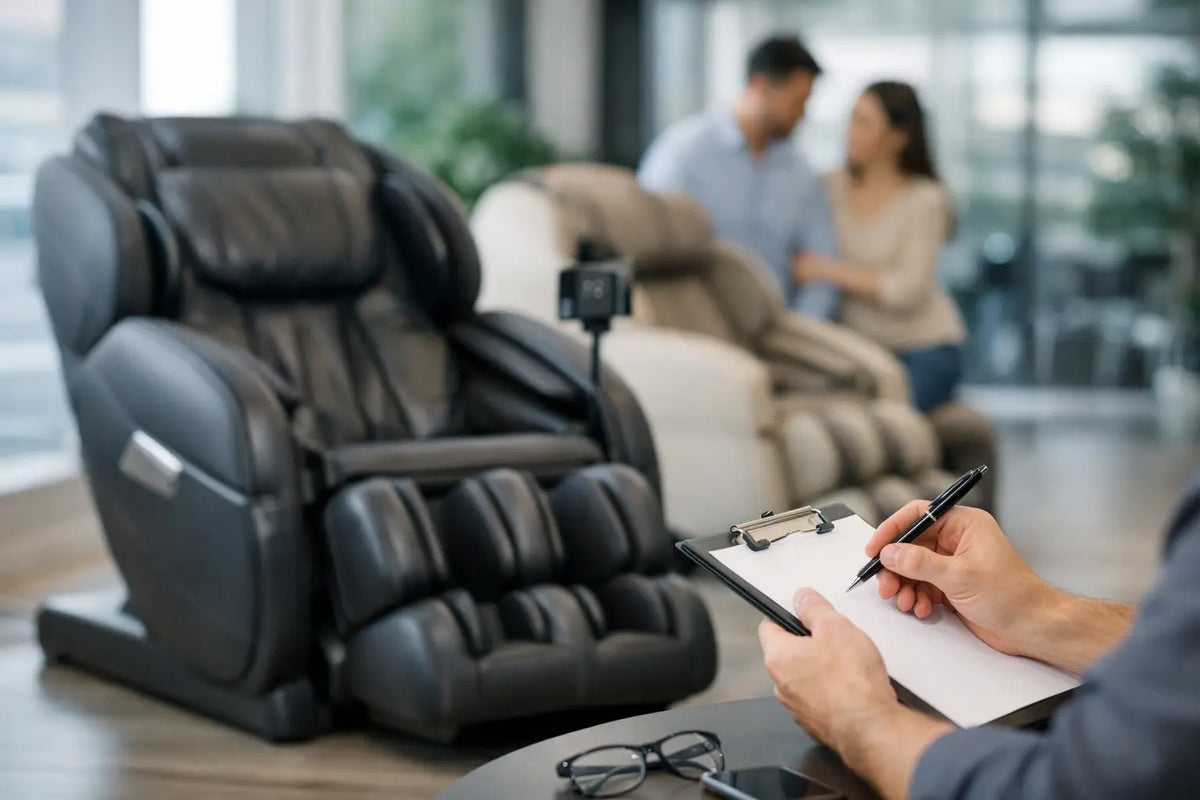
A massage chair should not become the most expensive seat in the room. For a high-performing household, it should become a dependable part of the day: a place to downshift after travel, restore tired legs after training, or create a quiet boundary between a demanding workday and the evening ahead. Knowing how to evaluate massage chairs means looking beyond impressive feature lists and choosing a system that delivers meaningful comfort, fits the body well, and belongs naturally in your space.
A premium chair is an investment in private recovery. The right model can support relaxation, perceived muscle relief, circulation, mobility routines, and more consistent sleep habits. But results are personal. The best chair for a runner managing lower-body fatigue may not be the best choice for an executive who wants a daily decompression ritual focused on the neck, shoulders, and lumbar region. Before comparing tracks, rollers, or programs, it helps to know what you are actually judging — starting with the massage itself.
How to Evaluate Massage Chairs for Massage Quality
Massage quality begins with the mechanism, not the number of preset programs. Presets are convenient, but the underlying track, roller control, and body-detection technology determine whether the massage feels personalized or generic.
Assess the Track and Roller System
Look first at the massage track. An S-track follows the natural curve of the spine, while an L-track generally extends from the neck and shoulders through the lower back and beneath the glutes. For many buyers, an L-track offers a more complete recovery experience, particularly when hip and glute tension is part of the equation.
Track length alone does not guarantee better performance. What matters is how accurately the rollers locate and follow the body. Seek out models with body scanning or shoulder-position adjustment, especially if several people will use the chair. A chair that cannot align its rollers to your frame will struggle to deliver a refined massage, regardless of its specifications.
Then consider roller movement. Two-dimensional systems move up and down. Three-dimensional rollers add depth, allowing the massage to press farther outward. Four-dimensional systems may also vary speed and rhythm to create a more human-like cadence. More dimensions can offer greater nuance, but they also make intensity control essential. The ideal chair Breakthrough 7 Plus should let you reduce depth, target a specific area, and adjust speed without interrupting your session. A chair like the Breakthrough 7 Plus, built around a genuine mechanical leap in roller technology rather than just a longer program list, is a good example of what that distinction looks like in practice.
Test the Techniques That Matter to You
Kneading, tapping, rolling, shiatsu-inspired pressure, and percussion-style movements all feel different. A useful evaluation does not ask whether a chair has every technique. It asks whether its techniques feel convincing where you need them most.
Pay close attention to the neck, shoulders, lumbar area, glutes, calves, and feet. These are the zones where many chairs reveal their limitations. Rollers should move smoothly, airbags should inflate without abrupt squeezing, and foot rollers should feel adjustable rather than punishing. If a chair has heat, treat it as a complement to the massage experience, not a substitute for effective roller work.
Fit Is More Important Than a Beautiful Spec Sheet
A massage chair can look sculptural and still be wrong for your body. Check the stated user height range, weight capacity, seat width, calf length, and footwell dimensions. These measurements matter even more in a shared home, where the chair may need to accommodate a tall partner, a smaller-framed user, or guests.
Leg extension deserves careful consideration. Chairs with automatic ottoman extension can better accommodate different heights, while fixed footwells can be restrictive. If your feet feel compressed or your knees cannot settle comfortably, a long session will become less appealing.
Zero-gravity positioning is another feature worth evaluating in person when possible. In this reclined position, the legs elevate and body weight is distributed more evenly across the chair. Many users find it improves comfort and creates a sense of weightlessness during massage. Still, the label is used broadly. Test whether the recline feels stable, natural, and supportive for your body rather than assuming every zero-gravity setting will feel the same. A chair like the De-Stress proves that dialing in a genuine fit doesn't require the highest price tier.
Choose Features That Earn Their Place
Premium chairs often include a long list of additions: heat zones, stretching programs, Bluetooth audio, voice controls, chromotherapy lighting, air compression, and memory settings. Some add genuine value. Others are pleasant but should not drive the decision.
Air compression is especially relevant for users who value leg recovery and a secure, enveloping feel. Well-calibrated airbags can create soothing pressure around the shoulders, arms, hips, calves, and feet. Poorly calibrated airbags can feel distracting or overly restrictive. Look for adjustable intensity and the ability to select body zones independently.
Stretch programs can be valuable for people who spend extended hours seated or carry persistent tightness through the hips and back. These programs use airbags and recline angles to gently position the body. They should feel controlled, never aggressive. Anyone with an injury, recent surgery, significant osteoporosis, pregnancy, or a medical condition should consult a qualified healthcare professional before using intensive massage or stretching functions.
Memory settings are practical when two or more people use the chair regularly. So are easy controls. A refined experience is diminished if the remote requires a manual each time you want a 20-minute shoulder program. Test navigation, program labeling, and whether manual adjustments are intuitive. A chair like the Breakthrough X justifies its price with features you'll actually reach for — hot stone heat, full-body stretch, body twist — not just a longer spec sheet.
Look Closely at Ownership, Delivery, and Support
The buying experience should match the caliber of the chair. Confirm the manufacturer warranty, what components are covered, the length of coverage, and how service is handled in your area. A generous warranty has limited value if repair coordination is unclear or replacement parts are difficult to access.
Ask how the chair will be delivered. Many high-end models arrive by freight and require careful placement due to their size and weight. White-glove delivery, room-of-choice placement, packaging removal, and setup coordination can be as valuable as an additional feature, particularly in multi-level residences or design-sensitive homes.
For a larger residence, hospitality property, spa, athletic facility, or wellness development, consider the chair within the broader environment. Placement, electrical access, guest flow, finish selection, and service planning all affect the final experience. Luxe Vida Wellness supports this level of consideration through curated sourcing and coordinated wellness-space planning.
Make the Decision From the Body Outward
A compelling massage chair does more than display technology. It meets your body where it carries stress, gives you control over intensity, and makes recovery inviting enough to become a daily standard. Choose the chair that feels exceptional in the positions and programs you will actually use.
Once you know what to look for in the massage itself, the rest of the decision comes together quickly. For guidance on room placement, clearance, and what to expect from delivery and warranty support, see our guide on building a massage chair recovery ritual. And when you're ready to compare specific models side by side — tracks, price tiers, and feature sets — How to Pick the Best Massage Chair breaks down the full lineup.
The most rewarding choice is the one that turns an unused corner of the home into a place you are genuinely drawn to at the end of the day.