Recovery Room Equipment List for Elevated Results
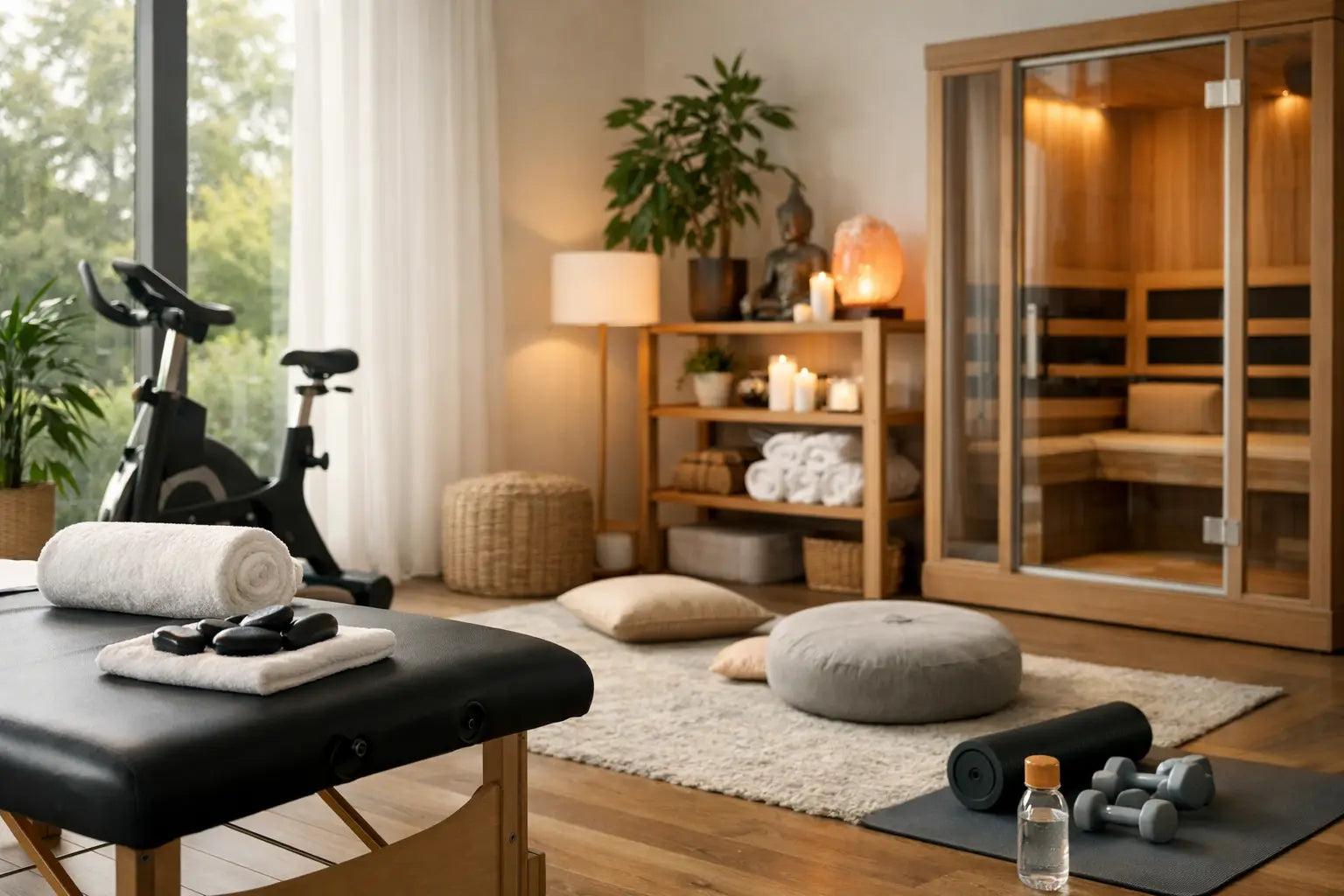
A considered recovery room equipment list is not a collection of trending devices. It is a system that gives demanding bodies and busy minds a reliable place to reset. The right room can support post-training relief, better sleep, circulation, stress management, and the rare luxury of uninterrupted time devoted to your own well-being.
For a private residence, boutique fitness facility, destination spa, or luxury hospitality project, the best selections begin with the experience you want guests or residents to have. A serious athlete may prioritize contrast therapy and compression. An executive household may value infrared heat, red light, and quiet restoration. The equipment should serve the ritual, not compete for attention.
Recovery Room Equipment List: The Essential Categories
A complete space does not require every modality. It requires the right combination, specified for your goals, square footage, electrical capacity, ventilation, and daily routine. These are the categories worth considering when planning a high-performance recovery environment.
The essential categories:
Sauna — heat and relaxation
Cold Plunge — contrast and focus
Red Light Therapy — recovery and skin support
Compression Therapy — circulation and relief
PEMF Therapy — passive, restorative support
Massage Chairs and Treatment Tables — hands-on recovery
Movement and Mobility Equipment — stretching and controlled movement
Sauna: Heat That Earns Its Place
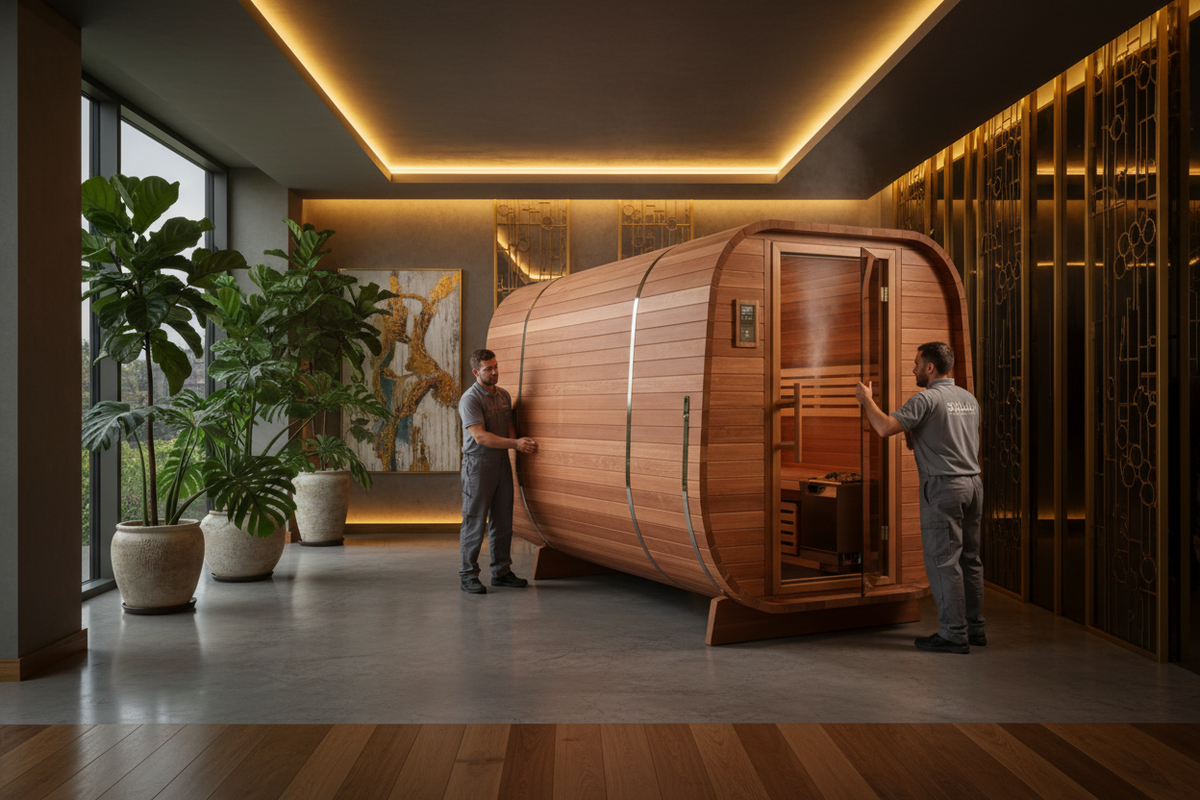
A sauna is often the anchor of a recovery room because it creates an unmistakable transition from effort to restoration. Traditional saunas deliver the classic high-heat experience, while infrared saunas offer gentler ambient temperatures with infrared heat designed to warm the body directly. Both can become a powerful part of an evening ritual or post-workout routine.
The choice depends on preference and use case. Traditional sauna enthusiasts often appreciate the immersive heat, atmosphere, and optional steam created by pouring water over stones. Infrared may better suit users who prefer longer, lower-temperature sessions or want a sleek, efficient footprint. In either format, allow for proper electrical planning, ventilation, service access, and materials that complement the rest of the room.
Cold Plunge: A Focused Reset
Cold plunges bring contrast, discipline, and a distinctly invigorating finish to a recovery ritual. Many users incorporate cold exposure after heat, following demanding training, or as a morning practice that establishes focus before the day begins.
The premium difference is found in temperature control, filtration, sanitation, insulation, and ease of entry. A beautiful tub that is difficult to maintain will not become part of a consistent routine. For residential installations, consider water management, floor drainage, humidity, and the path from the plunge to a shower or changing area. In commercial settings, durable finishes, sanitation protocols, and turnover between guests become equally critical.
Red Light Therapy: Luxury in Every Ray
Red light therapy beds and panels bring a polished, low-effort modality to the room. Users often choose them to support skin appearance, muscle recovery, and an elevated wind-down routine. A full-body bed offers an immersive treatment experience, while panels provide more flexible placement and targeted use.
Placement matters. A panel can work beautifully beside a stretching zone or massage chair, provided it has the correct clearance and users can stand or sit at the intended distance. A bed needs dedicated circulation space and should feel private, calm, and intentionally lit. The goal is not to make the room feel clinical. It is to make advanced wellness technology feel inevitable within the design.
Compression Therapy: Recovery While You Pause
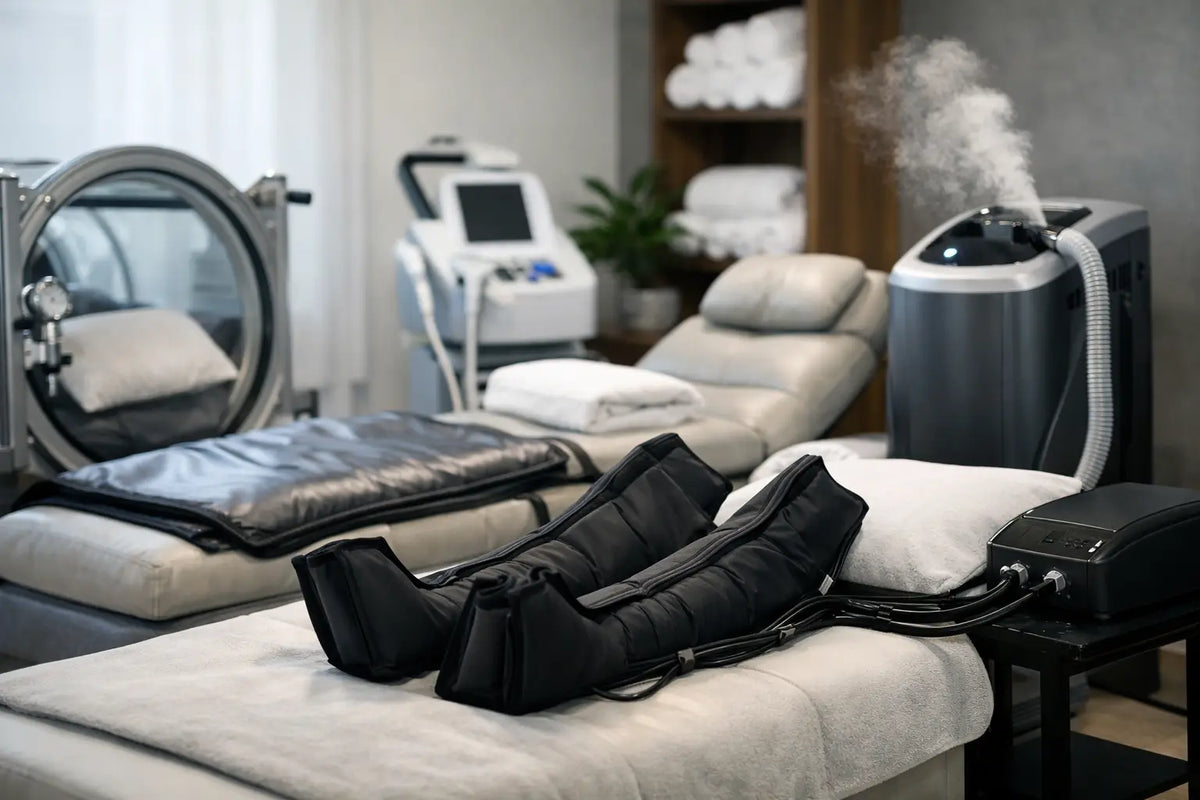
Compression boots are among the most practical additions to a recovery room. They are easy to integrate, require little square footage, and offer a compelling option for people dealing with heavy legs after travel, long workdays, endurance training, or demanding lower-body sessions.
Create a dedicated seated station rather than treating compression as an accessory to be stored away. A deeply comfortable lounge chair, a side table for water, a charging point, and soft task lighting turn a 30-minute session into a ritual people will repeat. For a smaller home suite, this can be one of the highest-value zones in the entire room.
PEMF Therapy: Quiet Support for a Restorative Routine
PEMF therapy equipment is designed for a more passive recovery experience. It can be used on a mat, lounger, or treatment table, making it especially well suited to spaces centered on decompression, mobility work, and restorative practices.
This modality benefits from thoughtful programming more than visual drama. Position it where the user can be comfortable and undisturbed, with storage for controls and accessories kept discreet. A PEMF station pairs naturally with red light therapy, breathwork, or a quiet post-sauna reset.
Massage Chairs and Treatment Tables
A premium massage chair provides immediate appeal in a private wellness suite, executive lounge, or hospitality setting. It offers a familiar recovery experience without requiring a therapist appointment, and it can become the room's most-used piece when selected for comfort as carefully as for features.
A treatment table may be the better choice for a home with a personal practitioner, a spa environment, or a multipurpose recovery studio. The trade-off is that tables ask more of the room operationally. You need linens, storage, circulation, and a clear approach to hygiene. A massage chair is more self-contained, while a table provides greater flexibility for hands-on care.
Movement and Mobility Equipment
Not every recovery room needs cardio equipment, but an infrared treadmill, bike, or other infrared cardio option can make sense for clients seeking a more complete performance suite. These pieces are best when the room has enough space to maintain a genuine sense of calm rather than feeling crowded.
For most projects, a refined mobility zone is the smarter first move. Include open floor area, premium mats, a bench, and a limited selection of tools for stretching and controlled movement. Recovery works best when the room invites use without asking the user to navigate an obstacle course.
How to Prioritize Your Recovery Room Equipment List
Start with one primary outcome. If your household trains hard, build around heat, cold, and compression. If sleep, stress, and daily restoration are the priorities, begin with an infrared sauna, red light therapy, and a quiet seated treatment zone. If the project is commercial, consider the guest journey from arrival through treatment, showering, changing, and departure.
Then address the infrastructure before selecting finishes. Electrical service, floor load, drains, ventilation, ceiling height, door clearances, humidity control, and equipment delivery routes can determine what is possible. A cold plunge may be compact, but its supporting requirements are not the same as those of a red light panel. A sauna may look effortless once installed, but its placement should be resolved early in the design process.
Finally, protect visual restraint. A luxury recovery room is not improved by filling every wall and corner. Choose equipment with a cohesive material palette, conceal cables and supplies, and reserve generous open space around the modalities that matter most. Strength and serenity should exist in harmony.
Design Details That Make the Room Feel Complete
The equipment earns attention, but the surrounding details determine whether the room becomes a habit. Plan for a nearby shower, towel warming, robes, hydration, closed storage, dimmable lighting, acoustic privacy, and a seating area that encourages a few extra minutes of stillness. Slip-resistant flooring is a practical necessity around heat and water, yet it can still feel elevated through stone-look porcelain, textured tile, or other performance-forward finishes.
For hospitality and residential development projects, durability and serviceability deserve the same scrutiny as aesthetics. Specify materials that can withstand moisture, frequent cleaning, and repeated use. Leave access for maintenance. Consider how a guest will understand the equipment without a lengthy explanation. World-class hospitality is often the result of thoughtful details that remain invisible.
Luxe Vida Wellness can help clients translate a broad wish list into a properly scaled suite, with custom sourcing, delivery coordination, installation planning, and specifications aligned to the project. That level of support is particularly valuable when several modalities must work together in one finished environment.
The most effective recovery room does not ask you to find time for wellness. It gives you a reason to return: heat after effort, cold for clarity, a quiet chair for circulation, and a space where your standard of care is visible in every detail.
Frequently Asked Questions
What equipment do I need for a home recovery room?
A considered starting point pairs one heat source, such as a sauna, with one cold source, such as a cold plunge or cryotherapy unit. From there, additions like compression therapy, red light, or PEMF should reflect your specific goals, available space, and daily routine.
Is a sauna or a cold plunge more important for recovery?
Neither modality replaces the other. Heat encourages circulation and relaxation, while cold supports inflammation control and mental clarity. Many of the most effective recovery rooms use both in sequence, allowing contrast therapy to do the work neither can accomplish alone.
How much space does a recovery room actually need?
A functional recovery room can be built in as little as 80 to 120 square feet with a compact sauna, a cold plunge, and a seated compression station. Larger performance suites, particularly in hospitality or multi-user settings, often extend to 300 square feet or more to accommodate movement space and guest flow.