Saunas for Personal Use That Fit Your Life
A private sauna changes the rhythm of recovery. Instead of fitting an appointment between meetings, driving across town after training, or hoping the club sauna is available, you step into a calm, intentional space on your own schedule. Saunas for personal use make heat therapy part of the home itself - a daily ritual for decompression, muscle comfort, sleep preparation, and the quiet reset that high performance requires.
The right choice is not simply the hottest model or the largest cabin your room can hold. It is the sauna that suits how you live, how you recover, and how you want your home to feel. For some, that means the deep, enveloping heat and ceremony of a traditional sauna. For others, it means infrared warmth, lower operating temperatures, and a refined session that fits neatly between a workout and dinner.
Why Personal Sauna Ownership Feels Different
The value of a home sauna is consistency. Heat exposure can support relaxation, ease the sense of post-training stiffness, and create a dependable transition out of a demanding day. Those benefits are difficult to enjoy when access depends on a facility’s hours, travel time, or shared amenities.
At home, the experience becomes more personal. You control the temperature, lighting, music, timing, and pace. A 20-minute infrared session before bed can become a protected boundary between work and rest. A traditional sauna session after a long ride or lift can become the beginning of your recovery protocol, followed by hydration, a cool shower, or a cold plunge for those who enjoy contrast therapy.
There is also an architectural advantage. A well-selected sauna can turn an underused guest room, lower level, primary-suite bath, gym, or pool house into a true wellness environment. It is not just equipment placed in a room. It is a destination within the home, where strength and serenity exist in harmony.
Saunas for Personal Use: Infrared or Traditional?
The central decision is the heat experience you want. Both formats can be exceptional, but they deliver warmth differently and ask different things of your space.
Infrared Saunas for an Efficient Daily Ritual
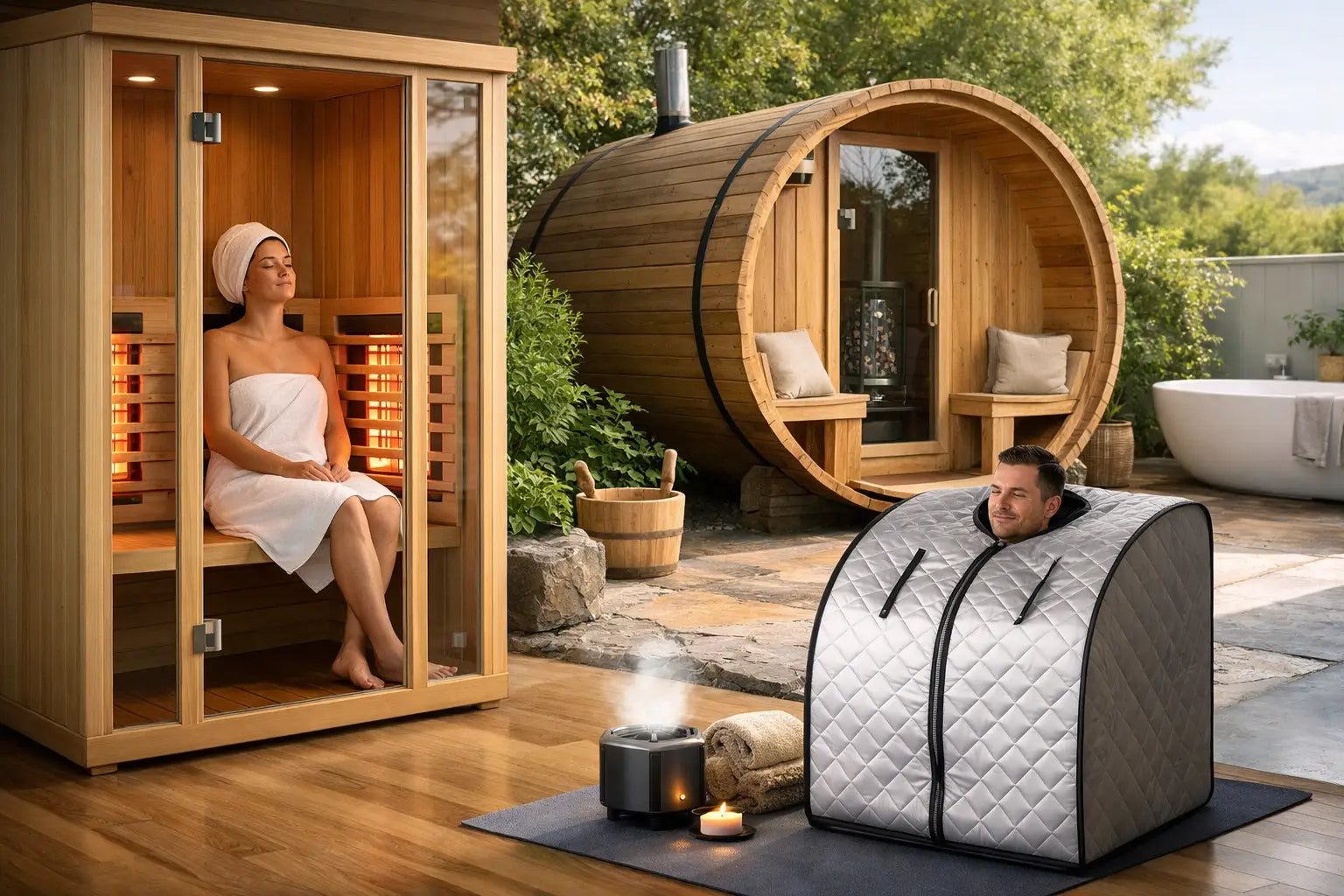
infrared saunas use radiant heaters to warm the body directly rather than relying primarily on extremely hot air. They generally operate at lower ambient temperatures than traditional units, often making the experience more approachable for longer, more frequent sessions. Many owners appreciate infrared after work, after strength training, or before bed because it provides a gradual, comfortable heat experience without the intensity of a high-heat room.
A premium infrared sauna can also be easier to place indoors. Many models are designed for straightforward electrical connections, compact footprints, and polished finishes that belong in a luxury residence rather than a utility room. Features such as full-spectrum infrared, low-EMF construction, chromotherapy lighting, integrated audio, and ergonomic bench design can elevate the ritual, though the specifications should serve your habits rather than distract from them.
Infrared is often the practical choice for the buyer who wants frequent, low-friction access to heat therapy. It is not necessarily the correct choice for someone who loves the unmistakable atmosphere of sauna stones, steam, and high-temperature air.
Traditional Saunas for Authentic Heat and Steam
traditional saunas use an electric or wood-fired heater to heat the room and, in many designs, sauna stones. Water can be ladled over the stones to create steam, increasing the sensation of heat and giving each session a more ceremonial quality. The air is hotter, the environment is more immersive, and the experience feels closer to the Scandinavian standard many people picture when they think of a sauna.
This format is especially compelling for homeowners designing a dedicated recovery suite, outdoor wellness pavilion, or hospitality-grade amenity. The materials matter: carefully selected wood, thoughtful ventilation, quality doors, and proportionate benching are not cosmetic details. They influence comfort, durability, and the way the room holds heat.
Traditional saunas usually require more purposeful planning. Electrical requirements, ventilation, heater clearances, flooring, room construction, and local codes should be considered early. The result can be extraordinary, but this is a project where experienced specification and installation coordination protect both the investment and the experience.
Start With Your Routine, Not the Feature List
A sauna should earn its place in your week. Before choosing capacity, finish, or heater type, consider when you will actually use it. A solo professional with a structured morning routine may be best served by a one- or two-person infrared model near the home gym. A couple who views sauna as an evening ritual may want two-person bench space and easier access to a shower. A family or serious athlete may prefer a larger traditional sauna with room to stretch out between training blocks.
Think honestly about the session you enjoy. If you tend to leave overheated rooms quickly, an infrared sauna may make consistency easier. If you find that dry, high heat and the option to add steam are the point of the experience, a traditional sauna offers something infrared cannot replicate.
Capacity deserves similar honesty. A two-person sauna is not always a comfortable two-person retreat, especially if both people want to recline. Conversely, oversizing a sauna can add cost, increase warm-up time, and consume valuable square footage without improving your routine. Choose for your real household and preferred use, not the occasional holiday gathering.
Plan the Space Like a Wellness Suite
Indoor placement should balance convenience with privacy. A sauna next to a shower, gym, or primary bathroom simplifies the recovery sequence. A sauna positioned across the house from water access may still work, but the experience becomes less instinctive. The most successful installations minimize friction: towels nearby, hydration within reach, a place to sit afterward, and enough clearance to enter and exit comfortably.
For outdoor installations Blisspod Prague Outdoor Barrel Sauna, weather resistance, a stable foundation, electrical access, drainage, and the path from the house all deserve attention. An outdoor sauna can be spectacular near a pool, cold plunge, or landscaped terrace, but a beautiful unit that is inconvenient in rain or winter will be used less often. Covered transitions, appropriate lighting, and privacy screening are practical luxuries.
Do not treat ventilation and power as afterthoughts. Traditional units in particular should be planned with the correct electrical service and manufacturer-recommended ventilation. Indoor materials around the sauna need to tolerate heat and humidity. A qualified installer can confirm site conditions before delivery, avoiding expensive revisions after your sauna arrives.
Premium Details That Actually Matter
Luxury is not a long list of add-ons. It is a space that feels considered every time you enter it. Comfortable bench depth, non-toxic interior materials, reliable controls, insulated construction, clean joinery, and properly designed lighting have a direct effect on daily use.
For infrared models, heater coverage and placement are worth closer attention than novelty features. You want balanced warmth across the body while seated, not a cabin that looks impressive but delivers an uneven session. For traditional saunas, heater sizing should match the room volume and construction, while stone capacity and control placement shape the character and convenience of each session.
Design should also align with the rest of the residence. Natural wood can introduce warmth to a contemporary gym, while a darker, more architectural finish may complement a tailored lower-level lounge. In a larger project, a sauna can anchor a complete recovery suite with cold water therapy, red light, compression, and a dedicated relaxation area. The modalities should work together without making the room feel clinical or crowded.
Use Heat With Intention
More time and more heat are not automatically better. Start with a temperature and duration that feel manageable, then build consistency. Many owners begin with 15 to 20 minutes and adjust according to comfort, hydration, and the type of sauna they use. Leave the session if you feel dizzy, nauseated, unwell, or overly fatigued.
Hydrate before and after, and avoid using a sauna when dehydrated, impaired by alcohol, or acutely ill. People who are pregnant, have cardiovascular concerns, take medications that affect heat tolerance, or have other medical conditions should speak with a qualified clinician before establishing a heat routine. A personal sauna is a powerful wellness tool, not a substitute for medical care.
The best sauna is the one that invites you back tomorrow. Select heat that you enjoy, place it where your routine naturally unfolds, and give the surrounding details the same consideration you would give any high-value part of your home. With the right environment, recovery stops feeling like another obligation and becomes a private standard you are genuinely ready to keep.
Whether you're drawn to the deep heat of a traditional sauna or the everyday ease of infrared, the right personal sauna is the one that becomes part of your routine, not just your home. Request a Quote and let's find the sauna, space, and setup that actually fits how you live.