Red Light Bed Buying for a Better Recovery Room
A red light bed should feel less like another piece of fitness equipment and more like a private appointment with your best self. That is the standard behind thoughtful red light bed buying: selecting a system that supports consistent recovery while belonging naturally in the room, routine, and level of service you expect.
For the high-performing homeowner, the question is rarely whether recovery deserves space. It is whether the equipment will deliver a meaningful full-body experience without creating visual clutter, operational friction, or a complicated new obligation. The right bed makes light therapy accessible enough to become part of the week, not a feature admired only on delivery day.
Start With the Experience You Want to Repeat
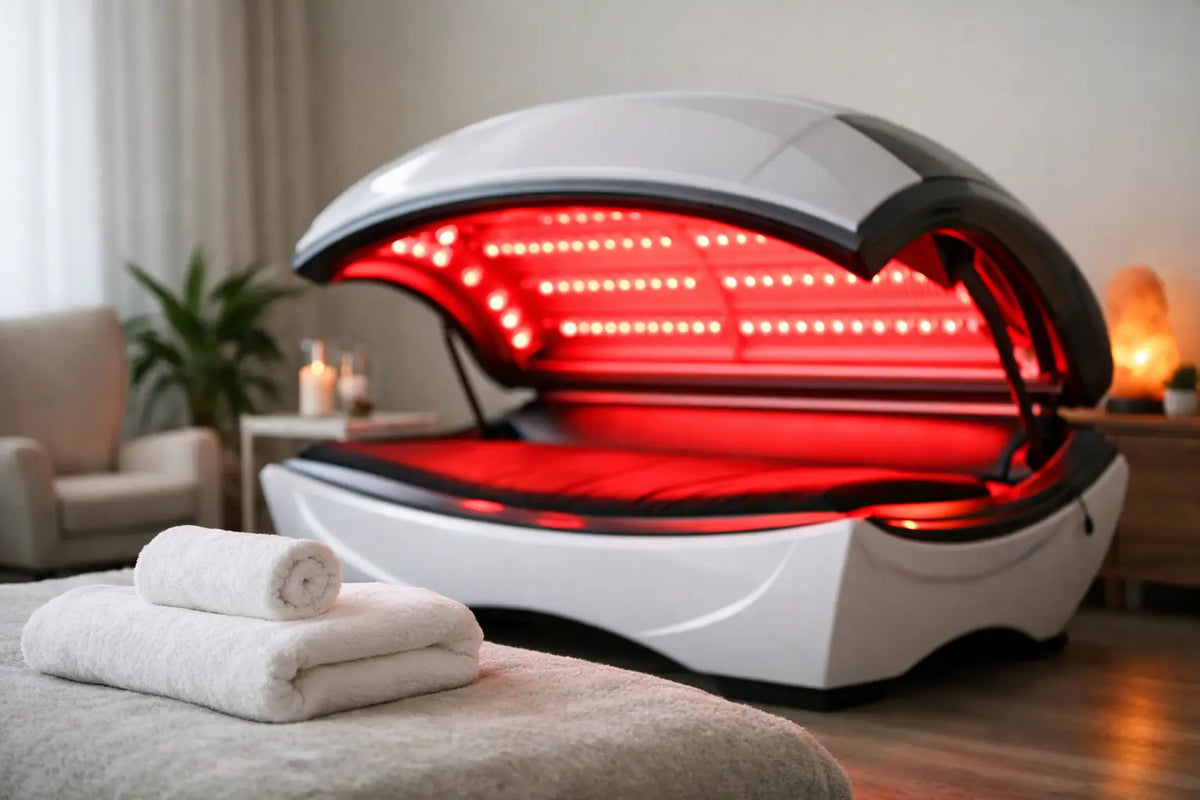
A red light bed like the Vital Bed is designed for full-body photobiomodulation, using visible red and near-infrared light. Red wavelengths are generally associated with more surface-level applications, while near-infrared wavelengths reach deeper into tissue. Together, they are commonly sought to support skin appearance, muscle recovery, circulation, and a calmer wind-down ritual.
Those goals matter, but they should not be treated as a guarantee of a specific medical outcome. Results vary by individual, consistency, overall health, and the quality of the device and protocol. A premium purchase is strongest when it is framed as recovery support within a broader lifestyle that may include training, sleep, hydration, nutrition, sauna, cold therapy, and restorative downtime.
Before comparing specifications, decide what role the bed will play. An athlete managing a demanding training calendar may prioritize efficient full-body coverage and scheduling flexibility. An executive building a daily longevity ritual may care equally about comfort, design, quiet operation, and a bedroom or spa-suite footprint that feels intentional. A hospitality or fitness operator must also consider throughput, durability, guest instructions, and service access.
This clarity prevents a common mistake: purchasing solely on the promise of the highest output without considering whether the system will be pleasant and practical enough to use.
What Actually Matters When Buying a Red Light Bed
The language surrounding red light therapy can become overly technical quickly. Specifications do matter, but their value comes from how they shape the experience and whether they can be understood, verified, and supported after purchase.
Full-body coverage and treatment geometry
A bed's advantage is coverage. Instead of repositioning in front of a panel, you can treat a larger area of the body in one session. Look beyond the label "full body" and consider where the light sources are positioned, whether the design provides illumination above and below the body, and how comfortably a user can lie down.
A system with superior coverage can make a material difference for someone using a full-body red light bed like the OneBase LightBed 360 after full-body strength work, endurance training, travel, or long days at a desk. It also simplifies the ritual for households where multiple people may use the equipment.
Bed geometry affects more than convenience. Ask whether the unit feels enclosed or open, how easily users can enter and exit, and whether the interior accommodates a range of body types comfortably. For some clients, an open, contemporary design is the best match for a residential sanctuary. For others, a more enclosed format creates the privacy and immersion expected in a dedicated wellness room.
Wavelengths, output, and session control
Most serious systems use a combination of red and near-infrared wavelengths. Rather than chasing a single number, evaluate the complete light configuration, treatment area, and the manufacturer's testing and documentation. Irradiance, often expressed in milliwatts per square centimeter, helps describe the light power delivered at a given distance. Yet higher output is not automatically better if it compromises comfort, creates excess heat, or makes session timing difficult to manage.
What matters is a credible system designed to deliver an appropriate dose over a realistic session. Clear timers, straightforward controls, and instructions that support a consistent protocol are signs of equipment built for daily life. Ask whether settings can be adjusted, whether the display is intuitive, and whether the bed provides reasonable safeguards against accidental overuse.
A polished treatment experience should feel decisive. You should not need a technical manual every time you want ten or fifteen minutes of recovery.
Build quality, cooling, and comfort
Luxury in every ray is not only about the LEDs. It is also about how the unit feels in use. A premium red light bed should have durable materials, dependable hinges or lift mechanisms, thoughtful ventilation, and a surface that can be cleaned easily. Active cooling and smart airflow are especially relevant because comfort directly affects adherence.
Consider the sensory details that lesser equipment can overlook: fan noise, interior temperature, control placement, acrylic quality, and the stability of the bed when entering or exiting. In a primary residence, these are daily-use details. In a commercial environment, they become part of the guest's impression of the entire brand.
Red Light Bed Buying Begins With the Room
A bed is a significant spatial commitment. Measure the equipment footprint, then account for the clearance needed for installation, opening components, safe access, ventilation, electrical connections, and service. Do not assume that a room that can physically contain the bed is the right room for it.
The strongest home installations give the modality a setting worthy of the ritual. That might be a dedicated recovery room near a home gym, a private suite beside a sauna and cold plunge, or a beautifully appointed wellness wing that invites a slower evening routine. Lighting, flooring, ceiling height, privacy, and climate control all influence whether the room feels restorative.
For architects, designers, and developers, planning early is more economical and more elegant than forcing equipment into a completed space. Coordinate electrical requirements, access routes, structural considerations, ventilation, and finishes before construction closes. A red light bed can be specified as part of a cohesive amenity story rather than treated as an afterthought.
Delivery and installation are part of the product
High-end wellness equipment does not end at checkout. Confirm how freight will be coordinated, whether the destination has stairs, narrow hallways, elevators, gates, or other access constraints, and what level of placement or installation support is available. A large unit may require careful scheduling and a clear site plan.
Also ask who will help if the system requires service. Manufacturer warranty coverage, access to replacement parts, responsive support, and a defined escalation process deserve the same attention as light specifications. The most desirable equipment is backed by a buying experience that protects your time.
Compare Cost as a Long-Term Ownership Decision
Red light beds span a wide range of pricing, and the initial number is only one part of ownership. Lower-cost models may appear appealing until limitations in coverage, cooling, materials, warranty support, or delivery coordination (https://luxevidawellness.com/blogs/news/white-glove-wellness-equipment-delivery) emerge. Conversely, a commercial-grade system can be excessive for a buyer who needs a compact, personal-use solution rather than high daily throughput.
Assess value against your intended frequency of use, desired treatment experience, available space, and support expectations. Financing can make sense when a premium system is part of a larger home wellness buildout, but it should support a well-considered investment rather than encourage a rushed one.
For commercial buyers, calculate beyond the purchase price. Consider guest demand, appointment duration, cleaning protocols, staff training, service continuity, and the role the bed will play in membership, treatment, or room-rate strategy. A luxury amenity earns its place when it elevates both the guest experience and the operational model.
Questions Worth Asking Before You Commit
A knowledgeable supplier should answer direct questions without evasive marketing. Ask for the manufacturer's warranty terms, recommended treatment protocol, electrical requirements, dimensional drawings, weight, ventilation guidance, and clear delivery expectations. Request clarity on what is included, what is optional, and what happens if access conditions change before delivery.
You should also ask how the unit fits your broader goals. If you are building a recovery suite, the best selection may depend on how red light therapy complements your sauna, cold plunge, compression therapy, or cardio routine. Strength and serenity exist in harmony when each element has a purpose and the room supports the way you actually live.
A red light bed is a statement that recovery receives the same level of intention as work, training, and travel. Choose the one that makes that commitment feel effortless: visually exceptional, comfortable to use, professionally supported, and ready whenever your body asks for restoration.
Related reading: the benefits of a full-body red light bed, what to know before buying a red light device, and real red light studio layouts for inspiration.
A red light bed is one of the most personal investments you can make in daily recovery — and the right one should feel as considered as the room around it. Request a Quote and let's find the bed, layout, and service plan that fits your space and your ritual.