
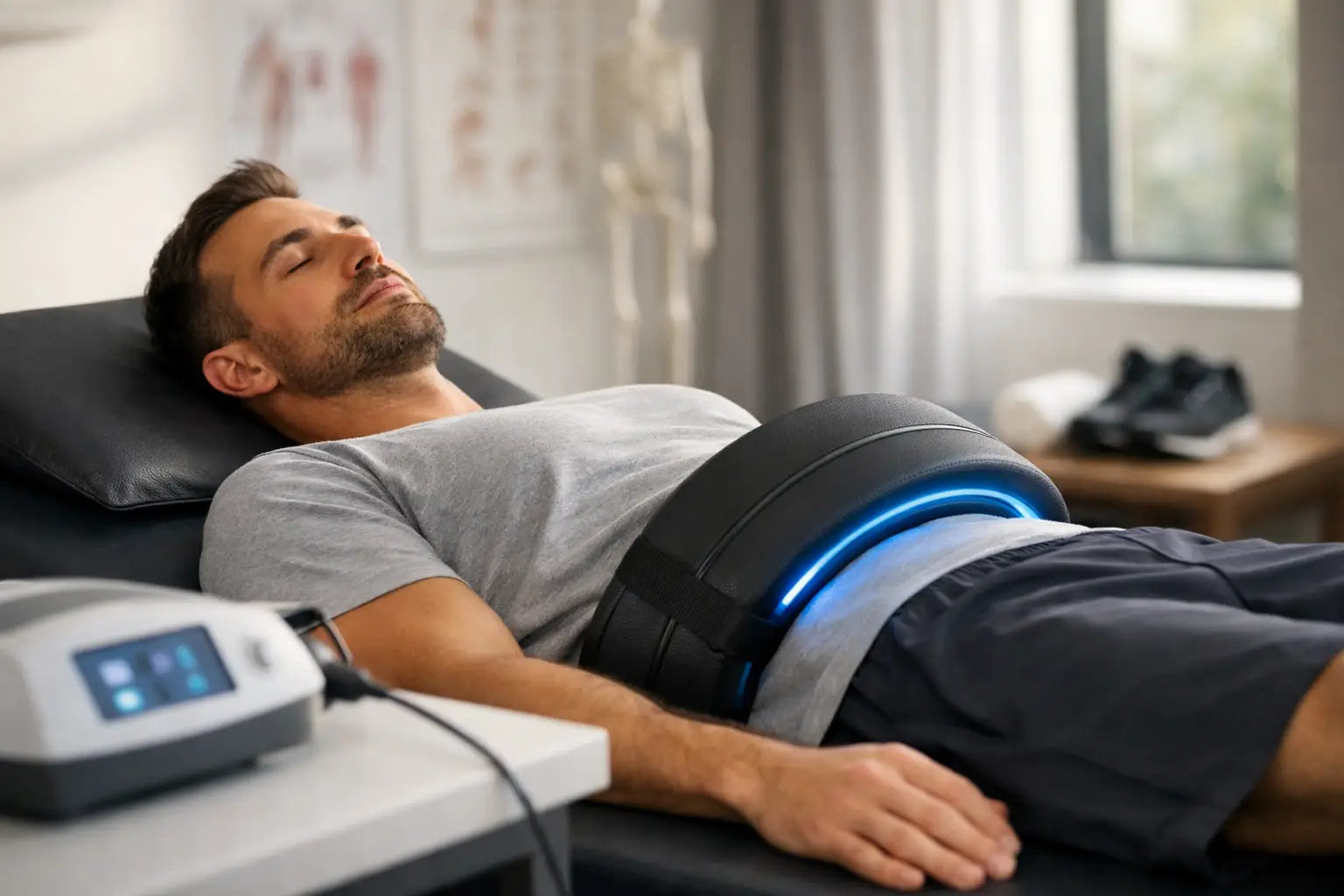
Does PEMF Improve Recovery? What the Evidence Says
The difference between an adequate recovery routine and an exceptional one is often felt the following morning: less stiffness when you step out of bed, a clearer mind before a demanding day, and greater readiness for your next session. So, does PEMF improve recovery? It can be a valuable supportive modality for some people, particularly when it is used consistently alongside sleep, nutrition, movement, and intelligent training load management. It is not a shortcut around those fundamentals, but it may make the recovery environment more complete.
PEMF, or pulsed electromagnetic field therapy, uses low-frequency electromagnetic pulses delivered through a mat, pad, or targeted applicator. For high-performing individuals who want privacy, consistency, and an elevated at-home ritual, it offers a low-effort way to create dedicated time for restoration.
Does PEMF Improve Recovery After Training?
The honest answer is nuanced. Research on PEMF has shown potential benefits in areas connected to recovery, including pain modulation, local circulation, tissue healing, and sleep quality. A 2025 randomized controlled trial in recreationally active adults, for example, found that while PEMF therapy did not produce statistically significant performance gains, participants using PEMF showed the most consistent reductions in perceived muscle soreness and improved peak power recovery at 24, 48, and 72 hours post-exercise. However, study designs, devices, treatment settings, and participant populations vary substantially. That makes it difficult to promise the same outcome for every athlete, executive, or wellness-focused homeowner.
The strongest practical case for PEMF is not that it replaces a recovery day. It is that it can support how you feel during one. Many users incorporate a session after a hard training block, during periods of travel and high stress, or in the evening when the goal is to transition out of constant output and into rest.
Some studies suggest pulsed electromagnetic fields may influence cellular signaling and microcirculation, while others point to changes in pain perception and inflammatory processes. These mechanisms are still being studied. In real life, the outcome that matters is simpler: whether a regular PEMF practice helps you feel less tense, sleep more soundly, or return to movement with greater comfort.
That distinction matters. A premium recovery space should be built around credible support and personal response, not exaggerated claims. If a modality helps you protect a consistent restorative routine, its value can extend beyond any single session.
Where PEMF May Fit Best
PEMF is especially appealing because it asks very little of the user. You lie down, settle in, and let the session create a boundary between exertion and restoration. That makes it well suited to people whose schedules make lengthy appointments or off-site recovery impractical.
After resistance training, endurance work, or a demanding match, a PEMF session may be used as part of a downshift routine. Pair it with hydration, a protein-forward meal, and a light walk or mobility work rather than treating it as a stand-alone solution. If you are managing ordinary muscular soreness, the calming, passive nature of the experience may be as useful as the technology itself.
For professionals, the recovery challenge is often not just physical. Long flights, boardroom pressure, screen exposure, and inconsistent sleep can leave the nervous system in a permanent state of readiness. A quiet 20- to 30-minute session in a purpose-built wellness suite can become a reliable cue to slow down. Used in the evening, PEMF may support a more intentional wind-down ritual, especially when the room is kept dim, cool, and free of interruptions.
It may also have a place during lower-intensity days. Recovery is not only what happens after your hardest effort. It is the accumulation of deliberate choices that allow your body and attention to stay resilient through an ambitious life.
What PEMF Cannot Do
A sophisticated recovery plan begins with clear expectations. PEMF does not erase the effects of chronic sleep restriction, under-fueling, excessive alcohol use, or a training plan that never allows adaptation. It cannot diagnose an injury, repair a serious tear overnight, or replace clinical evaluation for persistent pain, swelling, weakness, numbness, or reduced range of motion.
The evidence also does not support treating every PEMF device as identical. Frequency ranges, intensity, waveform characteristics, applicator design, and session protocols can differ. A 2026 systematic review of randomized controlled trials on PEMF for soft-tissue pain and function found the therapy generally safe and helpful for pain reduction, but rated the overall evidence quality as low, citing significant variation in treatment frequencies, intensities, and protocols across studies. Consumer-oriented full-body systems are generally designed for wellness and relaxation use, while medical devices may have specific cleared indications and practitioner-directed protocols. The distinction should remain clear when evaluating claims.
Results can vary with the issue being addressed. Someone seeking a calmer bedtime ritual may notice an immediate experiential benefit. Someone hoping for a dramatic change in post-marathon soreness may find the effect more modest. Track your own response over several weeks rather than judging the modality after one session.
Building PEMF Into a Complete Recovery Ritual
The most effective recovery spaces make healthy decisions easier. PEMF works beautifully as an anchor modality because it is comfortable, quiet, and simple to use. The key is giving it a purposeful place in your routine.
A post-training sequence might begin with gentle movement and hydration, followed by a PEMF session while your body settles. If heat is part of your routine, an infrared sauna session can be used at a separate point in the day or before a cooldown period, depending on your comfort, hydration status, and goals. Compression therapy may be useful after prolonged standing, travel, or heavy lower-body training. Red light therapy can complement a performance-focused space when selected for its intended use and applied consistently.
These modalities do not need to be stacked into an exhausting checklist. In fact, restraint often creates the better ritual. Choose one or two tools that match the day you had and the result you want: release, circulation support, calm, or sleep readiness. Strength and serenity exist in harmony when recovery feels sustainable enough to repeat.
For a residential setting, consider where the device will live before choosing it. A full-body PEMF mat belongs in a quiet bedroom, lounge, or dedicated wellness room where you will actually use it. It should be easy to access, visually compatible with the surrounding space, and supported by a practical power plan. For a hospitality, spa, or athletic facility, durability, sanitation workflow, guest turnover, and professional installation coordination deserve equal consideration.
How to Evaluate a PEMF System
Price alone does not tell you whether a PEMF system is appropriate. Look first at the intended application. Do you want a full-body mat for daily relaxation, a targeted unit for a specific area, or a system designed to become part of a larger recovery suite? Then consider the manufacturer's instructions, warranty coverage, controls, session options, materials, and service support.
A few questions help clarify the investment: Is the system comfortable enough to use regularly? Are its settings understandable without becoming overly technical? Does it fit the dimensions and design language of the room? Is there dependable guidance for delivery, setup, and ongoing support? For commercial environments, can the supplier assist with custom specifications, freight planning, and installation coordination?
The best equipment does more than occupy a corner. It earns its place through repeat use. That is why an expertly curated wellness environment is often more valuable than a collection of disconnected devices. Luxe Vida Wellness approaches recovery as a complete standard of living, with equipment and project support selected around the way a space is meant to perform.
Safety and Sensible Use
PEMF is generally noninvasive, but noninvasive does not mean right for everyone. Follow the device manufacturer’s guidance carefully. People with implanted electronic devices, including pacemakers or certain neurostimulators, should seek medical advice before use. Pregnancy, active cancer treatment, a seizure disorder, recent surgery, or a complex medical condition also warrant a conversation with a qualified clinician.
If you are using PEMF around an injury, be precise about your goal. Comfort support is different from medical treatment. Persistent symptoms deserve an assessment from a licensed healthcare professional, especially when they affect function or worsen over time.
Start with the recommended settings and a modest session length. More intensity is not automatically better. A well-designed recovery practice should leave you feeling settled and ready for the next part of your day, not overstimulated or fatigued.
PEMF is most compelling when viewed as part of the architecture of recovery: a private, consistent moment where your body is given permission to downshift. Let the evidence guide your expectations, let your own response shape the routine, and build a sanctuary that makes restoration as intentional as performance.
Ready to make recovery part of your everyday standard? Request a quote and let's find the modality that fits your body, your schedule, and your goals.