Hotel Sauna Procurement Guide for Luxury Stays
A sauna can be the quiet reason a guest chooses your property again. It is not simply a warm room beside the fitness center. Done well, it becomes part of a recovery ritual that elevates the spa, extends guest dwell time, and signals that your hotel understands modern luxury. This hotel sauna procurement guide is designed for hospitality teams that want to make that investment with confidence, from the first floor plan to a polished opening day.
Start With the Guest Experience, Not the Heater
The most successful hotel sauna projects begin with a clear answer to one question: what should a guest feel when they leave? For an urban business hotel, the goal may be efficient decompression after a flight or long day of meetings. For a destination resort, the sauna may anchor a more immersive thermal circuit alongside cold water, treatment rooms, and relaxation lounges. A boutique fitness-forward property may position it as a serious recovery amenity for training-minded travelers.
That decision shapes almost every specification that follows. A two-person infrared cabin placed inside a premium suite serves a very different purpose than a traditional sauna designed for eight spa guests. Capacity, heat style, visual presence, operating hours, and staffing all need to reflect the guest journey you are building.
Avoid treating the sauna as an isolated line item near the end of a renovation. It affects mechanical planning, electrical capacity, wet-area design, ventilation, finishes, guest circulation, and operating procedures. Bringing the sauna specification into the conversation early protects both the design intent and the budget.
Choose the Right Sauna Format for the Property
Traditional and infrared saunas can both support a world-class hospitality experience, but they deliver heat differently and require different planning.
Traditional sauna: the complete thermal ritual
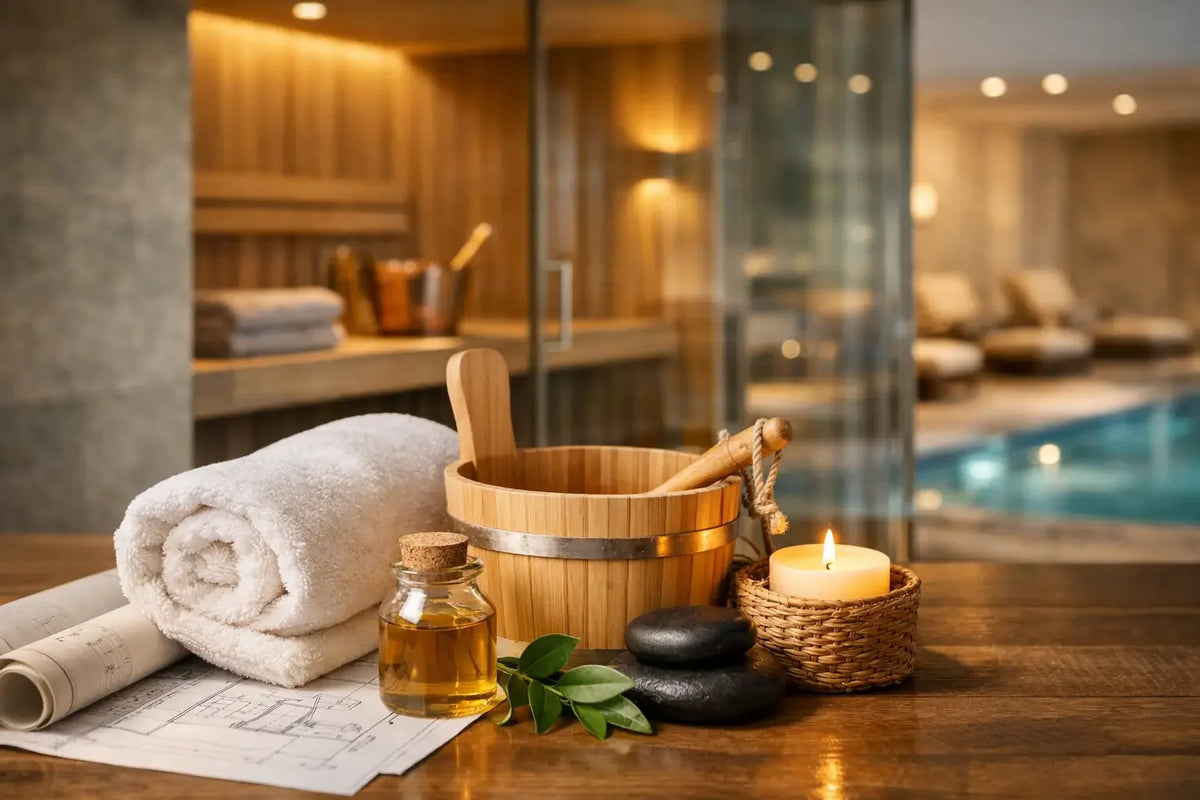
A traditional sauna uses an electric heater and sauna stones to create high ambient temperatures. Water can be poured over the stones where permitted, adding steam and a more sensory, ritual-driven experience. This is often the strongest choice for destination spas, luxury resorts, and hotels creating a complete hydrotherapy circuit.
Traditional systems typically require more careful coordination around dedicated electrical service, ventilation, heat-resistant construction, drains in certain designs, and commercial-grade controls. Their appeal is undeniable: the warmth feels communal, immersive, and rooted in an established wellness tradition. But they are not a casual plug-in amenity. Procurement should include an experienced review of local code, fire and life-safety requirements, electrical load, accessibility, and service access.
Infrared sauna: private, efficient, and flexible
Infrared saunas warm the body more directly at lower ambient temperatures. Many guests appreciate the gentler environment, especially those who prefer a shorter, more private session or do not enjoy the intensity of a conventional sauna. They can work exceptionally well in hotel suites, private recovery rooms, compact fitness areas, and wellness lounges where fast turnover and design flexibility matter.
The trade-off is experiential rather than inferior. Infrared does not replicate the stone-heater ritual or the social atmosphere of a traditional sauna. It is a different recovery experience, one that can feel particularly aligned with business travelers, high-performing guests, and properties with limited space or infrastructure.
For some projects, the right answer is both: a traditional sauna in the spa circuit and infrared cabins in private treatment or recovery spaces. Strength and serenity exist in harmony when each modality has a clear role.
Specify for Commercial Reality
A beautiful sauna that cannot withstand daily guest use is an expensive design feature. Commercial procurement requires a different standard than selecting a residential unit, particularly in properties with long operating hours, high occupancy, and a demanding brand promise.
Begin with realistic capacity. Do not calculate seating by the maximum number of bodies that can physically fit inside the cabin. Consider changing time, the comfort of the bench layout, guest privacy, and the traffic pattern outside the door. A sauna that is technically sized for six but feels crowded with four will undermine the experience.
Materials deserve equal scrutiny. Interior woods should be stable under repeated heat cycles, comfortable to the touch, and selected for both appearance and longevity. Bench construction, backrests, door hardware, glazing, and floor surfaces must tolerate consistent cleaning and heavy use. In a luxury setting, details such as concealed fasteners, refined lighting, and the grain and tone of the wood carry real weight. They are what separate a wellness amenity from a utility room.
Commercial controls should be intuitive for guests and manageable for staff. Consider timed sessions, temperature limits, remote monitoring where appropriate, scheduled preheating, emergency shutoff, and access control. The goal is not to burden the guest with instructions. It is to make the ritual feel effortless while giving operations teams a reliable system to oversee.
Confirm the infrastructure before placing the order
The specification should be verified against the actual site, not an early concept drawing. Confirm electrical voltage and available amperage, dedicated circuits, heater placement, ventilation path, ceiling height, door swing, floor construction, and access for delivery. For traditional sauna rooms, account for moisture management and consult the project team on drainage requirements for the selected design and jurisdiction.
Local requirements vary. A hospitality project may need permits, inspections, specific safety signage, rated materials, accessibility considerations, or restrictions on how the sauna is controlled and supervised. Manufacturer guidance is essential, but it does not replace coordination with the architect, MEP engineer, general contractor, and local authority having jurisdiction.
Design the Sauna as Part of a Wellness Suite
Guests remember transitions. The feeling of stepping from a sauna into a cold plunge, a softly lit relaxation room, or a quiet shower zone can define the stay more than any single piece of equipment. This is why sauna procurement should be tied to the full wellness environment.
Position the sauna close enough to showers, cooling options, towel service, and hydration that the sequence feels intuitive. Plan for dry and wet circulation so guests are not crossing public fitness areas in a robe or carrying damp towels through an arrival corridor. Thoughtful acoustic treatment also matters. The space should feel insulated from the energy of a busy hotel, even when it sits beside a gym or spa reception — the same principle that separates forgettable hotel wellness amenities from ones guests actually remember.
Lighting should support the use case. Bright, clinical overhead fixtures weaken a restorative environment. Warm, indirect illumination, considered task lighting at controls, and carefully selected glass can make the room feel calming without compromising safety. Designers should also account for sightlines. Privacy is a luxury, particularly in coed wellness areas and urban properties where space is limited.
For hotel groups developing a signature wellness identity, consistency is valuable. Repeating a recognizable material palette, lighting language, and guest instruction style across properties creates a stronger brand memory. Yet the final design should still respond to the location. A mountain resort may call for a more elemental, timber-forward expression, while a city hotel may benefit from precise lines, dark stone, and compact infrared recovery spaces.
Evaluate the Full Cost, Not Just the Purchase Price
A lower initial quote can become the most expensive choice when it creates installation revisions, excessive energy use, avoidable service calls, or an experience that feels below the rest of the property. Evaluate the complete cost of ownership: equipment, freight, site preparation, electrical and mechanical work, finishes, installation coordination, staff training, maintenance, warranty coverage, and anticipated replacement parts.
Lead times should be addressed early, especially for custom dimensions, specialty woods, glass packages, branded finishes, and imported components. Procurement teams should ask what is included in the quoted scope and what belongs to the contractor. Ambiguity around curbside freight, final placement, assembly, electrical connection, and debris removal is a common source of friction on otherwise well-planned projects.
A premium sourcing partner can simplify this process by coordinating specifications with the design and construction teams, arranging commercial delivery, and helping align equipment choices with the operational vision. Luxe Vida Wellness supports hospitality projects with custom sourcing, volume pricing, delivery coordination, and installation planning for spaces where the details cannot be left to chance.
Build Operations Into the Specification
The guest-facing experience depends on invisible routines. Before opening, establish who inspects the room, how often it is cleaned, how towels are replenished, when the heater is activated, and what staff should do if a guest reports discomfort or equipment concern. Clear protocols protect guests, preserve finishes, and extend equipment life.
Sauna care should use products appropriate for the selected wood, surfaces, and heater system. Harsh chemicals may damage materials or leave odors that become pronounced under heat. Staff training should also cover signage, session timing, hydration reminders, and when to take a unit offline for service. A pristine sauna is a visible expression of hospitality; a neglected one is equally visible.
A Better Standard for Hotel Wellness
The right sauna does more than fill a spa program requirement. It gives guests a private moment to recover from travel, release the pressure of a demanding schedule, and return to their room feeling restored. Specify it with the same intention you bring to the best suite, restaurant, or treatment room. When the equipment, architecture, and operations are aligned, the sauna becomes not just an amenity, but a reason to return.
Ready to bring a world-class sauna experience to your property? Start building your wellness space and create a recovery ritual designed around your guests and your brand.