Compression Boots Review for Elevated Recovery
The difference between an accessory and a true recovery ritual is apparent the morning after a hard session, a long-haul flight, or a demanding week at work. This compression boots review looks beyond the promise of a quick leg refresh to assess what premium pneumatic compression can realistically bring to an ambitious lifestyle: more consistent recovery, a welcome sense of lightness, and a private moment of restoration on demand.
For serious athletes, executives, and wellness-minded homeowners, compression boots are not a substitute for sleep, nutrition, movement, or clinical care when it is needed. They are a practical way to make lower-body recovery more intentional. The right system earns its place in a home wellness sanctuary because it is comfortable enough to use often, refined enough to live with, and capable enough to support demanding routines.
Compression Boots Review: What They Do Well
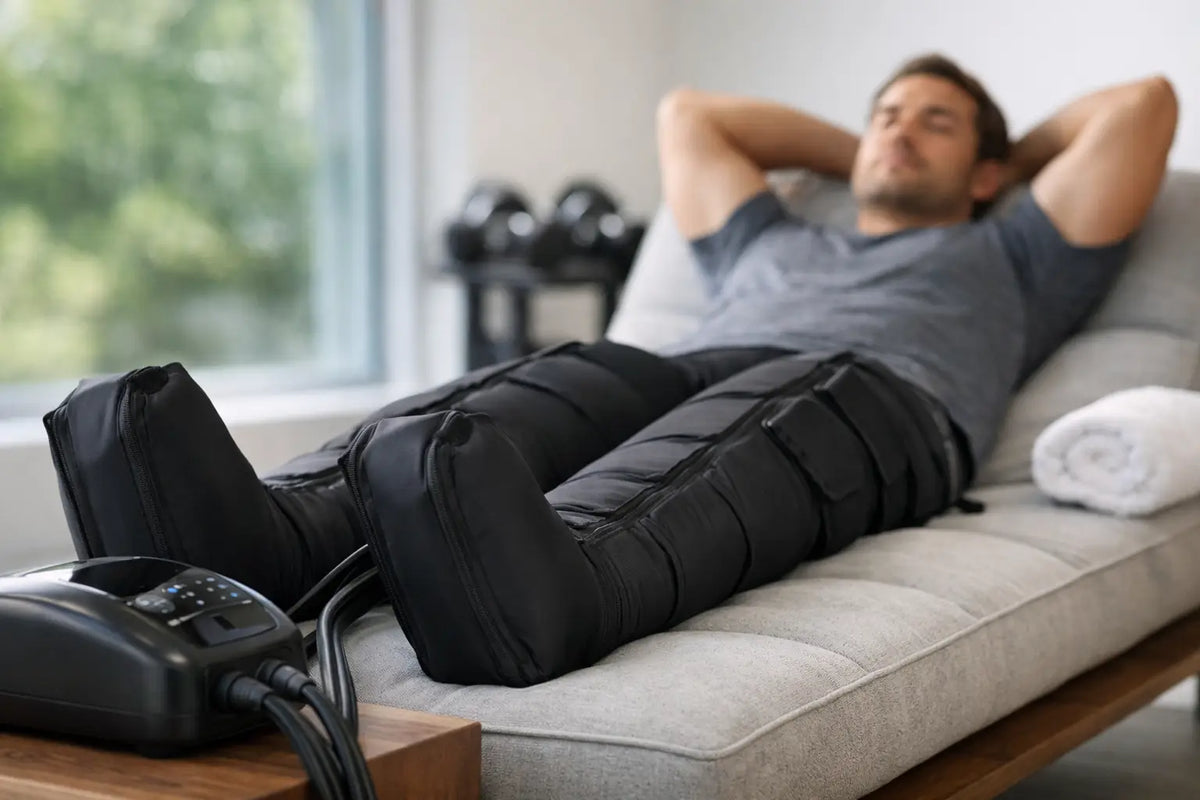
Compression boots use inflatable chambers to apply sequential pressure to the feet, calves, and thighs. As chambers fill and release in a programmed pattern, they create a rhythmic massage-like sensation designed to support circulation and the body’s natural recovery process. Most users reach for them after training, extended sitting, travel, or simply when their legs feel heavy.
The immediate appeal is straightforward. A 20- to 45-minute session requires very little effort: settle into a chair, sofa, or recovery lounge, select a program, and allow the system to work. For people whose schedules make regular appointments impractical, that convenience is meaningful. The best recovery tools are often the ones that remove friction from good habits.
Premium boots also deliver a level of control that basic massage devices cannot. Adjustable pressure, zone selection, and multiple sequence patterns let users tailor the session to how they feel that day. After a lower-body strength workout, a firmer, more comprehensive program may feel appropriate. After a flight or during a quieter evening, a gentler setting can create a deeply restorative reset.
That said, the experience should not be mistaken for a miracle. Compression can help legs feel refreshed and relaxed, but results vary with training load, hydration, sleep, and individual physiology. Buyers should be wary of systems presented as a cure for injury, circulation disorders, or chronic swelling. Anyone with a vascular condition, unexplained leg pain or swelling, a history of blood clots, or other medical concerns should speak with a qualified clinician before using pneumatic compression.
The Features That Separate Premium Boots From Basic Models
A quality compression system is defined less by a dramatic pressure number than by the control, coverage, and consistency behind it. The most sophisticated models make it easy to create a session that feels precise rather than merely intense.
Chamber count and sequential coverage
More independently controlled air chambers generally allow for smoother, more targeted compression. With fewer chambers, the sensation can be broad and abrupt. A higher-chamber design can produce more graduated waves of pressure across the leg, which tends to feel more polished and allows for better zone-specific programming.
Full-leg coverage also matters. Some units stop below the knee, while others extend through the thigh and toward the hip. Calf-focused boots may suit someone with limited space or a narrow recovery need. For runners, cyclists, field athletes, and clients who want a more complete lower-body ritual, full-length boots are usually the more satisfying investment.
Pressure range that is usable, not just impressive
High pressure is not automatically better. The ideal setting is one that feels secure and substantial without numbness, pain, or excessive discomfort. A well-designed system offers a meaningful range of adjustment, allowing a first-time user to begin conservatively and a seasoned athlete to choose a more assertive session when appropriate.
Look for intuitive controls and the ability to adjust zones separately. If one area is especially sensitive after a hard workout, the option to reduce or bypass that region can make the system far more useful over time.
Programs that fit real routines
The most valuable programs are not the most numerous. They are the ones you will understand and use. Sequential modes create a flowing wave from the lower leg upward, while pulse or targeted modes may concentrate pressure in specific chambers. A full-leg program is ideal when your objective is total relaxation; a zone-focused program can be useful when calves or feet are carrying the day’s fatigue.
For a shared household, memory settings or a simple interface are worth prioritizing. Recovery equipment should feel inviting to everyone who uses it, not like a technical obstacle waiting at the end of a long day.
Fit, materials, and quiet operation
Fit determines comfort. Boots should accommodate your inseam and leg circumference without pulling at the zipper, bunching behind the knee, or leaving gaps around the foot. Measure before ordering, especially if more than one person will use the system. Extended sizing is a practical consideration, not a minor detail.
Materials should feel durable, easy to clean, and appropriately elevated for a refined wellness environment. Motor noise deserves attention too. A modest mechanical sound is expected, but a quiet unit preserves the calm of the experience. In a bedroom, private gym, or spa treatment suite, this distinction matters.
Who Benefits Most From At-Home Compression?
Compression boots are especially compelling for people who place repeated demands on their lower body. Endurance athletes may use them after long runs, rides, or tournament weekends. Strength athletes often appreciate the decompression ritual after leg-intensive training. Professionals who travel frequently can use a session to transition from airport fatigue into an evening at home.
They also fit a broader performance lifestyle. A founder with back-to-back meetings, a parent balancing training with a full calendar, or a homeowner building a dedicated recovery room may value the ability to sit down and reset without leaving the property. The benefit is as much behavioral as it is physical: a visible, ready-to-use recovery station makes it easier to protect time for yourself.
In commercial environments, compression boots bring a high-value, low-footprint amenity to boutique fitness facilities, luxury residential developments, hospitality lounges, and destination spas. They pair naturally with massage chairs, red light therapy, infrared heat, and cold exposure, though each modality should be selected around the client’s intended experience rather than added for appearance alone.
Where Compression Boots Have Limits
A candid review should account for the trade-offs. Even premium boots require storage space, a nearby power source, and time to use them. Full-length systems can feel warm and restrictive to people who dislike enclosed sensations. They are also not the most portable recovery option, although compact designs and carry cases improve their suitability for travel.
Cost is another consideration. Entry-level systems may offer basic inflation cycles at a lower price, but can compromise on coverage, adjustability, durability, and overall comfort. Premium models cost more because they are built for repeated use and a more tailored experience. Whether that premium is worthwhile depends on frequency. If compression will be used once a month, simplicity may be enough. If it will become part of a four- or five-day weekly recovery practice, quality quickly becomes more relevant.
It also depends on your wider wellness environment. A compression system may be the right first investment for someone seeking convenient leg recovery. For another buyer, a massage chair or infrared sauna may better match their stress, sleep, and full-body relaxation goals. The strongest home wellness spaces are curated around behavior, not assembled from isolated trends.
How to Choose With Confidence
Begin with your most common use case. If your legs feel taxed after endurance training, prioritize full coverage, sequential programs, and a broad pressure range. If frequent travel is the driving concern, assess weight, packability, and setup time. If the boots will live in a design-forward primary suite or home gym, consider finish, storage, and noise as part of the purchase decision.
Then consider service beyond the product itself. Premium equipment should come with clear warranty coverage, dependable product support, and delivery options suited to the investment. For larger residential and commercial projects, equipment selection should also account for room layout, electrical access, guest flow, storage, and installation coordination. Luxe Vida Wellness approaches these details as part of the experience, helping clients create recovery spaces where strength and serenity exist in harmony.
A compression system is at its best when it becomes the chair you choose after the workout, the flight, or the difficult day - not another impressive device left unopened in a closet. Choose the one that feels natural to use, place it where recovery can happen without negotiation, and let that small ritual raise the standard of your everyday care.
Ready to add compression to your recovery routine? Shop compression boots and find the system built for how you train, travel, and live.