Hyperbaric Chambers for Home Use: A Buyer's Guide
A hyperbaric chamber is not an accessory purchase. It is a dedicated recovery environment that asks more of a home than a red light panel or a pair of compression boots: protected floor space, thoughtful electrical planning, dependable service, and a clear understanding of how the technology is intended to be used.
For the client who values privacy, consistency, and a recovery ritual designed around an exacting schedule, that commitment can be the point. The right chamber creates a quiet, enclosed interval in the day - a place to step away from travel, training, deadlines, and constant input. But the category requires discernment. Pressure, oxygen delivery, medical claims, chamber construction, and safety standards are not interchangeable.
What a Hyperbaric Chamber Actually Does
A hyperbaric chamber raises the ambient pressure around the body above normal atmospheric pressure. Under higher pressure, gases dissolve differently in the bloodstream and tissues. This is the core physical principle behind hyperbaric oxygen therapy, often called HBOT.
The phrase is frequently used too broadly. Clinical hyperbaric oxygen therapy is a medical treatment delivered under the direction of qualified medical professionals, typically in a hard-sided chamber with protocols that may involve 100% oxygen. In the United States, it is used for specific conditions and carries meaningful operational requirements. It should not be treated as a general wellness service or substituted for medical care.
Home and wellness-oriented systems may operate at lower pressures, use room air, or pair chamber pressurization with an oxygen concentrator under manufacturer-directed protocols. These systems are often discussed as mild hyperbaric chambers. They occupy a different category from hospital-based treatment, and their potential benefits, claims, equipment requirements, and supervision needs should be evaluated accordingly.
That distinction protects both the buyer and the experience. A beautifully designed recovery suite should be grounded in credible expectations, not exaggerated promises.
Pressure, Oxygen, and Chamber Type
Pressure is commonly expressed in ATA, or atmospheres absolute. One ATA is normal pressure at sea level. The higher the chamber pressure, the more demanding its engineering, operation, and safety program become. A lower-pressure soft-sided chamber may suit a private wellness setting, while a higher-pressure hard chamber is a more substantial installation with a different level of infrastructure and oversight.
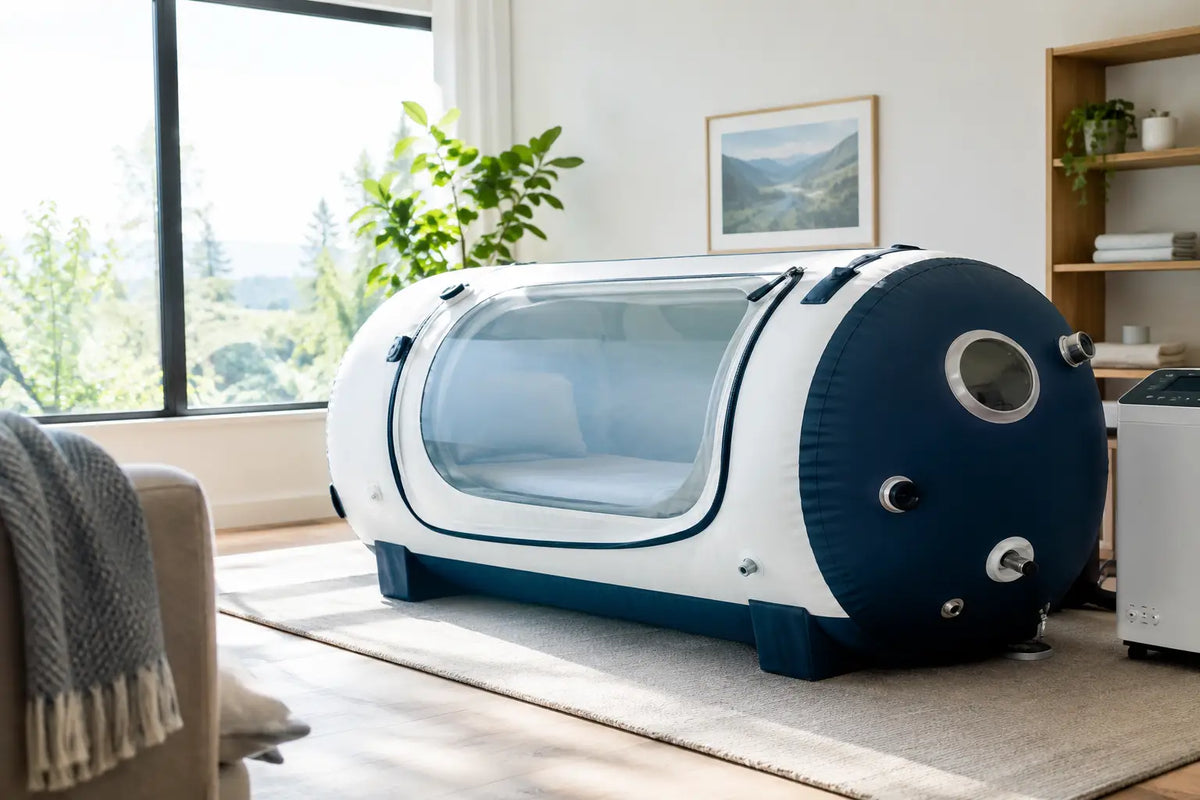
Soft chambers are generally portable in concept, though “portable” does not mean casual. For example, the Oxyair 1.5ATA Soft Shell Hyperbaric Chamber offers a flexible, lying-position design with multiple size options for home installations. They are often made from durable, flexible materials supported by an internal frame or air-filled structure. Their appeal is straightforward: a smaller visual footprint, a more approachable entry into the category, and placement flexibility for an established home gym, recovery room, or private office.
Hard-sided chambers are more architectural. The Oxyair 2.0 ATA Compact Hard Shell Hyperbaric Chamber is one example. They can offer a more spacious, polished experience and may be better suited to clients who prioritize durability, frequent use, easier entry, or a tailored commercial installation. Their size, finish, pressure capability, and utility needs vary considerably. The right choice depends on intended use, available space, the user’s mobility, and the standards of the property.
Oxygen delivery deserves equally close attention. Some systems use an oxygen concentrator and a mask or nasal cannula; others rely on chamber air. Buyers should understand exactly what is supplied, how it is delivered, what maintenance it requires, and which use protocols the manufacturer supports. More oxygen is not automatically better, particularly when safety and medical appropriateness have not been established.
The Safety Standard Is Part of the Luxury
Hyperbaric equipment deserves a more serious safety conversation than most home wellness modalities. Pressure changes can affect ears and sinuses, and some users may have medical reasons to avoid or postpone chamber use. A clinician should advise anyone with a relevant health condition, recent procedure, respiratory concern, ear issue, or question about suitability.
Fire prevention is central to chamber ownership. Oxygen-rich environments require strict adherence to manufacturer rules on clothing, personal-care products, electronics, batteries, and any materials brought into the chamber. This is not a place for improvisation. The operating team, household staff, and every user should know the protocol before a session begins.
For example, the Oxyair 1.5ATA Soft Shell Hyperbaric Chamber offers a flexible, lying-position design with multiple size options for home installations.
A considered chamber program includes four essentials:
- A pre-use screening process informed by a qualified clinician when appropriate.
- Clear training for every user and designated household or facility operator.
- A dedicated location with suitable power, ventilation, access, and clearance.
- A documented maintenance and emergency procedure based on the manufacturer’s instructions.
Planning a Hyperbaric Recovery Room
The most successful installation begins with the room, not the product page. Measure not only the chamber footprint but also circulation space, door swing, ceiling clearance, equipment access, and the route from delivery point to final placement. A chamber that technically fits can still feel compromised if there is no graceful way to enter, service, or exit it.
Temperature and acoustics matter. Compressors and concentrators can create heat and sound, so a serene experience may call for thoughtful ventilation, sound management, and equipment placement. In a luxury residence, the goal is not merely to house a device. It is to preserve the atmosphere of the sanctuary around it.
Design also shapes adherence. A chamber placed in a neglected basement corner may see less use than one integrated into a recovery suite beside a sauna, cold plunge, massage chair, or quiet lounge. The best arrangement supports a natural sequence: train, recover, reset, and return to the day without friction.
There is no universal protocol for combining modalities. Some people prefer a chamber session as a separate restorative appointment; others build it into a broader recovery day. Heat exposure, cold immersion, exercise intensity, hydration, and individual tolerance can all influence the right order. A qualified professional can help users with medical or performance-specific questions develop an approach that is appropriate for them.
Questions Worth Asking Before You Buy
Sophisticated buyers do not need more features. They need better answers. Start with the chamber’s intended use and pressure range, then ask how the system is installed, maintained, cleaned, and serviced. Confirm the warranty terms, the availability of replacement parts, and who handles technical support after delivery.
Ask what the complete setup requires beyond the chamber itself. Depending on the model, that may include a concentrator, compressor, electrical considerations, flooring protection, ventilation, and a planned location for accessories. If the system will be used by multiple family members or guests, ask how training is conducted and how usage guidance is documented.
For commercial projects, request a plan that addresses freight coordination, final placement, installation support, startup training, and long-term service. A wellness amenity is only as compelling as its reliability. Guests and members remember whether an experience feels effortless, private, and impeccably maintained.
It is also wise to separate wellness aspiration from medical expectation. No home chamber should be purchased on the assumption that it will diagnose, treat, cure, or prevent a disease. If a physician has recommended clinical HBOT for a specific condition, discuss the appropriate setting and equipment with that medical team rather than assuming a consumer wellness chamber is equivalent.
A More Considered Way to Invest in Recovery
A hyperbaric chamber can be a remarkable addition to a private recovery environment when it is selected with the same care as every other element of the space. The investment is not simply in pressurization. It is in reliable equipment, responsible operation, intentional design, and the ability to protect time for restoration.
For some homes, a chamber becomes the anchor of the suite. For others, it is best reserved for a dedicated wellness studio or a professionally staffed setting. The refined choice is the one that fits the user, the property, and the standard of care - creating a recovery ritual that feels composed, supported, and entirely your own.
Explore Hyperbaric Chambers at Luxe Vida Wellness
Creating a private recovery sanctuary begins with choosing equipment that complements your space, lifestyle, and individual needs. Explore our Hyperbaric Chamber Collection or contact Luxe Vida Wellness for personalized guidance on chamber options, space planning, and installation considerations.