Red Light Therapy Mask Versus Panel: Which Fits You?
A red light therapy mask can feel like the most elegant answer to a demanding skincare routine: place it on, settle into stillness, and let the treatment happen while the rest of the day falls away. A panel creates a different kind of ritual - broader, more adaptable, and better suited to a full-body recovery environment. When considering red light mask versus panel, the best choice is not about which device is universally superior. It is about how you want your wellness sanctuary to work.
For a polished complexion-focused ritual, a mask is often the natural fit. For muscle recovery, larger treatment areas, and a versatile performance space, a panel typically earns its place. The distinction matters because light therapy is most valuable when it is easy enough, comfortable enough, and well designed enough to become part of your standard.
Red Light Mask Versus Panel: The Core Difference
Both devices use red and near-infrared light, wavelengths commonly selected for their ability to support skin appearance, circulation, and post-training recovery routines. Red light is generally used closer to the surface of the skin, while near-infrared light reaches deeper into tissue. Exact wavelength combinations, output, treatment times, and intended uses vary by device, so the manufacturer’s protocol should always lead.
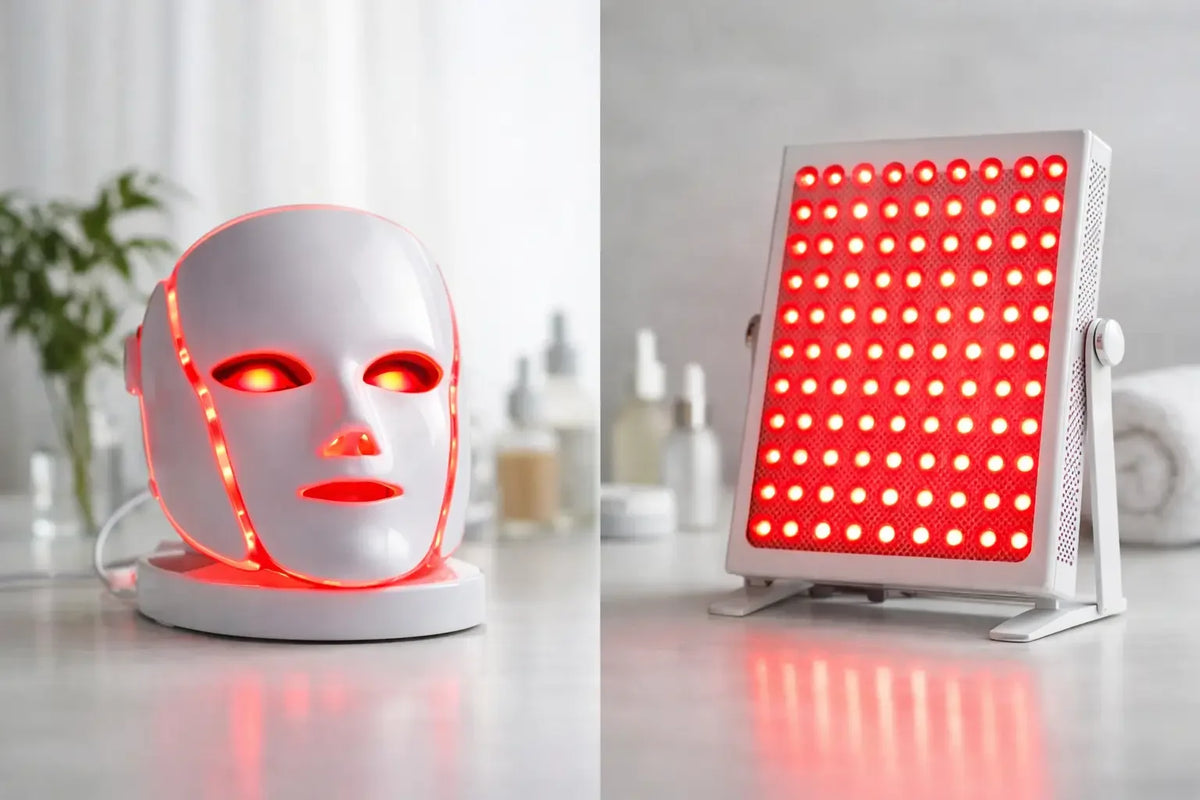
The essential difference is delivery. A red light therapy mask places light close to the face in a shaped, hands-free format. A panel projects light across an open area, allowing you to treat the face, neck, chest, back, legs, or other regions depending on its size and placement.
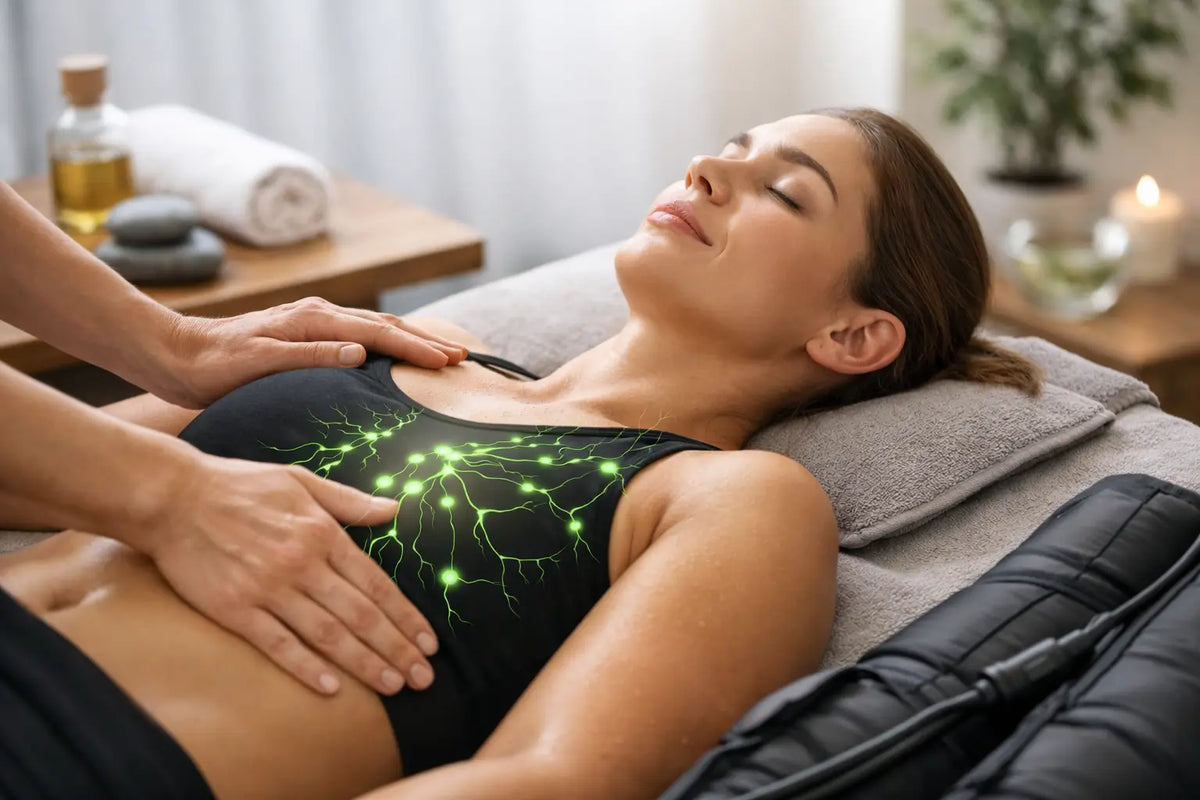
This changes more than coverage. It changes the rhythm of use. A mask is a private, contained skincare appointment at home. A panel can become the center of a more complete recovery ritual, paired with mobility work, compression, meditation, or the quiet reset after a sauna session.
Why a Red Light Mask Appeals to Skin-Focused Buyers
A premium mask is designed for precision and convenience is designed for precision and convenience. Its contoured form keeps LEDs consistently close to the face, helping simplify positioning. There is no need to measure your distance from a unit or adjust a stand between sessions. For executives moving between early calls, travel, training, and family life, that simplicity has real value.
Red light therapy masks are particularly compelling when your priority is facial skin quality. They are easy to keep near a vanity, beside a nightstand, or in a travel-ready wellness kit. A 10-minute session can fit naturally into an evening routine alongside cleansing and restorative skincare.
The trade-off is scope. Most masks are built primarily for the face, with some extending to the jawline or neck. They do not replace a broader system for large muscles, persistent post-training soreness, or full-body recovery. Their close-fitting design can also be less appealing for anyone who dislikes facial pressure, finds the straps inconvenient, or wants to move freely during treatment.
Eye comfort deserves consideration as well. Some masks include integrated eye protection or are designed to be used with eyes closed, but specifications differ. Comfort and safety features should be reviewed before purchase, especially for people who are light-sensitive or managing an eye condition.
Where a Panel Has the Advantage
A red light therapy panel offers range. Depending on its size, it can support a focused session on the face or a wider session for the shoulders, back, quads, calves, or chest. This makes it a strong investment for serious athletes, active households, and buyers who view red light therapy as part of a larger longevity and recovery strategy rather than a single skincare tool.
Panels are also more adaptable over time. The same device that supports your post-workout routine today may later serve your partner’s neck-and-shoulder reset, a focused lower-body session after a long flight, or a dedicated recovery zone in a home gym. In a luxury residence, that flexibility can make a panel feel less like a beauty device and more like lasting wellness infrastructure.
Output and treatment area often favor larger panels, but higher power is not automatically better. Appropriate dose depends on the device’s irradiance, your distance from it, the area being treated, and the recommended session duration. More exposure is not necessarily more effective. A well-specified panel with clear operating guidance is far more valuable than an oversized unit used inconsistently or too aggressively.
Red light therapy panels require more environmental planning. You need a stable place to mount or position the device, enough clearance to stand or sit at the recommended distance, and a routine that accounts for eye protection when advised. In exchange, you gain a treatment format that can evolve with your goals.
A panel belongs in a recovery ecosystem
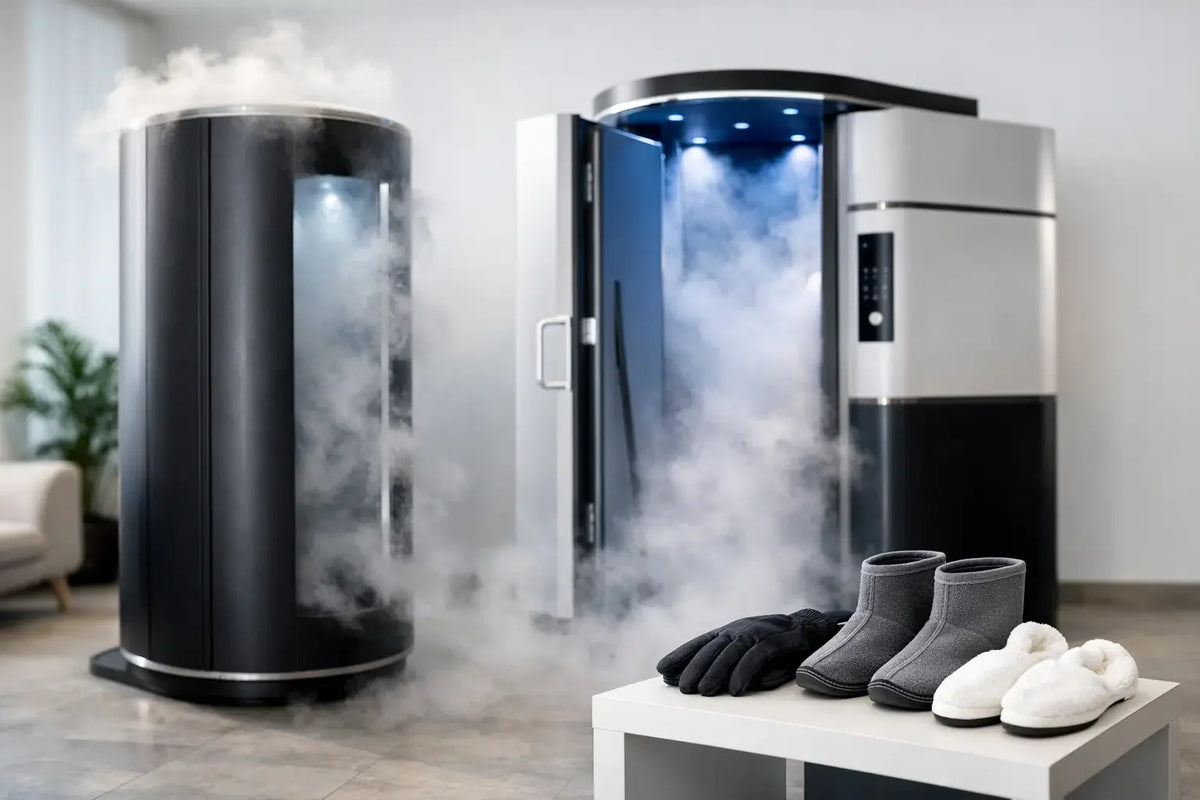
For many high-performing clients, the most satisfying setup is not a panel in isolation. It is a composed recovery space where every element has a purpose: heat for decompression, cold for resilience, compression for tired legs, and red light for a restorative pause. Strength and serenity exist in harmony when the room is designed around the way you actually live.
That is especially relevant in hospitality, fitness, and spa environments. A panel can be specified as part of a treatment room, recovery lounge, performance center, or private wellness suite. Its visual presence can be elevated with thoughtful placement, clean cable management, and professional installation coordination rather than treated as an afterthought.
How to Choose Between a Mask and a Panel
Start with the body area you intend to treat most often. If the honest answer is your face, and you want a frictionless routine that fits beside premium skincare, choose a mask. The best device is the one you will use consistently, not the one with the longest feature list.
Choose a panel when you want to treat both face and body, support training recovery, or create an at-home destination for restoration. A panel makes particular sense for runners, strength athletes, golfers, cyclists, and anyone who experiences regular muscular fatigue across large areas of the body.
Then consider your physical space. A mask asks very little of it. A panel deserves an intentional location, whether that is a bedroom, dressing room, home gym, or dedicated recovery suite. Wall-mounted and stand-based configurations each have advantages. Mounting creates a clean, permanent architectural look; a stand offers flexibility for changing treatment angles and rooms.
Finally, think about the experience you want. Masks excel at convenience and a refined facial ritual. Panels excel at versatility and immersion. Neither is a compromise when chosen for the right role.
Device Specifications That Actually Matter
Luxury equipment should make its performance clear. Look beyond marketing language and review the wavelengths offered, irradiance information at defined distances, treatment area, timer controls, cooling design, warranty coverage, and electrical requirements. For panels, assess mounting options and whether the dimensions suit the intended room. For masks, examine fit, weight, strap design, charging method, and whether the device is comfortable enough for regular sessions.
Quality also appears in the less glamorous details: even light distribution, durable materials, intuitive controls, reliable customer support, and a warranty that reflects confidence in the equipment. A premium purchase should feel composed from specification through setup.
If you have a photosensitivity condition, take medications that may increase sensitivity to light, are pregnant, or are managing a medical concern, speak with a qualified healthcare professional before beginning light therapy. Red light devices are wellness tools, not a substitute for medical diagnosis or treatment.
A Better Way to Build the Ritual
The strongest answer to red light therapy mask versus red light therapy panel may be both, provided each device has a distinct role. A mask can protect the consistency of your facial routine on busy weekdays and during travel. A panel can anchor longer recovery sessions at home, where you have the space to treat the body with intention.
For clients building a complete wellness environment, Luxe Vida Wellness can help align device selection with room dimensions, design expectations, recovery goals, delivery requirements, and installation planning. That level of curation matters when wellness is not an occasional indulgence, but part of how you perform.
Choose the device that removes resistance from your routine. A beautifully specified mask or panel should not become another item waiting for the right moment. It should make restoration feel close at hand - luxury in every ray, exactly where you need it.