
When Should Athletes Use Cryotherapy for Recovery?
A hard training block can leave an athlete with a familiar problem: tomorrow’s session matters, but today’s legs feel heavy, sore, and unresponsive. Knowing when athletes should use cryotherapy can turn cold exposure from an occasional luxury into a deliberately timed recovery tool. The distinction matters. Cryotherapy is not a substitute for sleep, intelligent programming, nutrition, or clinical care. It is a high-performance modality best used when reducing discomfort and restoring readiness are the priority.
For athletes who train, travel, compete, and lead demanding lives, recovery deserves the same level of intention as performance. A whole-body cryotherapy session can provide a focused reset, particularly during periods when the calendar leaves little room for residual soreness.
When Should Athletes Use Cryotherapy?
One of the more common uses of whole-body cryotherapy is after high-volume or high-impact training, particularly when managing soreness and perceived recovery before another demanding session. Think tournament weekends, multi-day endurance events, intense conditioning blocks, back-to-back practices, or a travel-heavy competition schedule. In these settings, the goal is not necessarily to force a training adaptation. It is to manage soreness, perceived fatigue, and the mental drag that can accompany a heavily loaded body.
Many athletes use whole-body cryotherapy after training, ideally once the immediate demands of the session are complete. This may be later that day, after refueling and rehydrating, or the following morning if stiffness is the greater issue. There is no single perfect hour for every athlete. The useful question is simpler: will a brief cold session help you move, rest, or perform better during the next 24 to 48 hours?
Cryotherapy can also fit well before a competition or training session when an athlete responds positively to cold exposure as a psychological and sensory reset. Some people report feeling alert, composed, and less aware of minor aches afterward. That does not mean it should be introduced for the first time on race day or before a major game. Pre-event use should be tested in normal training first, with careful attention to how it affects muscle temperature, mobility, and readiness.
Use It During Congested Performance Windows
A professional-grade recovery routine should reflect the season, not just the workout. Cryotherapy tends to be most valuable when performance must be repeated before the body has fully recovered.
For a basketball player with games on consecutive nights, a tennis player in a multi-match tournament, or a founder-athlete maintaining a rigorous training schedule while crossing time zones, the priority is often short-term recovery. A cryotherapy session may help make soreness more manageable and support the feeling of readiness needed to show up again.
This is also where the privacy and convenience of an at-home recovery environment become meaningful. Instead of adding another appointment to an already compressed day, athletes can move from training to hydration, nourishment, and a controlled recovery ritual in the comfort of their own sanctuary. The experience becomes less reactive and more consistent.
After Endurance, Contact, and High-Impact Training
Cryotherapy is often best suited to sessions that create substantial muscle soreness or a sense of whole-body wear: long runs, hill repeats, high-mileage cycling, hard court work, combat sports, field sports, plyometrics, and contact-heavy practices. Cold exposure may be particularly appealing after eccentric loading, such as downhill running or strength work that emphasizes slow lowering phases.
The evidence around whole-body cryotherapy is still evolving, and individual response varies. Some athletes experience a meaningful improvement in soreness or perceived recovery; others notice little difference. That is why a premium recovery plan should be measured, not assumed. Track how you feel the next day, how well you sleep, whether your movement quality improves, and whether the modality helps you sustain the training standard you expect.
When to Avoid Immediate Post-Lift Cryotherapy
There may be an important trade-off for athletes in a dedicated strength or muscle-building phase. Research on repeated cold-water immersion immediately after resistance training suggests it may interfere with some of the physiological processes involved in long-term strength and muscle adaptation. Because whole-body cryotherapy is a different form of cold exposure, these findings should not automatically be assumed to apply in the same way. Frequent cold exposure immediately after resistance training may blunt some of the cellular signaling associated with long-term strength and hypertrophy adaptations. The concern is most relevant when cold therapy becomes a habitual response after nearly every lift, particularly during a period focused on gaining muscle or maximizing strength.
That does not mean cryotherapy is off-limits for strength athletes. It means timing should match the objective. If today’s lifting session is designed to build size and strength over time, consider separating cryotherapy from the workout rather than making immediate post-lift cold exposure a routine. If the athlete is in season, competing soon, or managing substantial soreness after a game, short-term comfort and perceived recovery may take greater priority. It means timing should match the objective. If today’s lifting session is designed to build size and strength over months, consider separating cryotherapy from the workout by several hours or using it on a rest day. If the athlete is in season, competing soon, or managing substantial soreness after a game, short-term readiness may reasonably take precedence over maximizing adaptation from one session.
This is the standard of elite recovery: not more intervention, but the right intervention at the right moment.
Build Cryotherapy Around Your Training Goal
An athlete in an off-season development block should use cryotherapy differently from an athlete in the final week of competition. During a hypertrophy-focused block, reserve cold sessions for rest days, travel days, or unusually punishing sessions rather than making them automatic after every lift. During a competition-heavy phase, use them more strategically after games, late-stage practices, or high-impact efforts that would otherwise compromise the next performance.
For general fitness and longevity, the approach can be even more flexible. A brief cryotherapy session after a demanding workout may provide a welcome ritual of relief and renewal, especially if it encourages a consistent recovery practice. The result should be a better-supported lifestyle, not another rule that creates pressure.
A useful framework is to match the session to one of three intentions: reduce soreness after a demanding effort, improve perceived readiness before another high-output day, or create a restorative pause during travel and stressful periods. If none of those needs are present, cryotherapy may still feel excellent, but it is not essential that day.
A Refined Protocol for First-Time Users
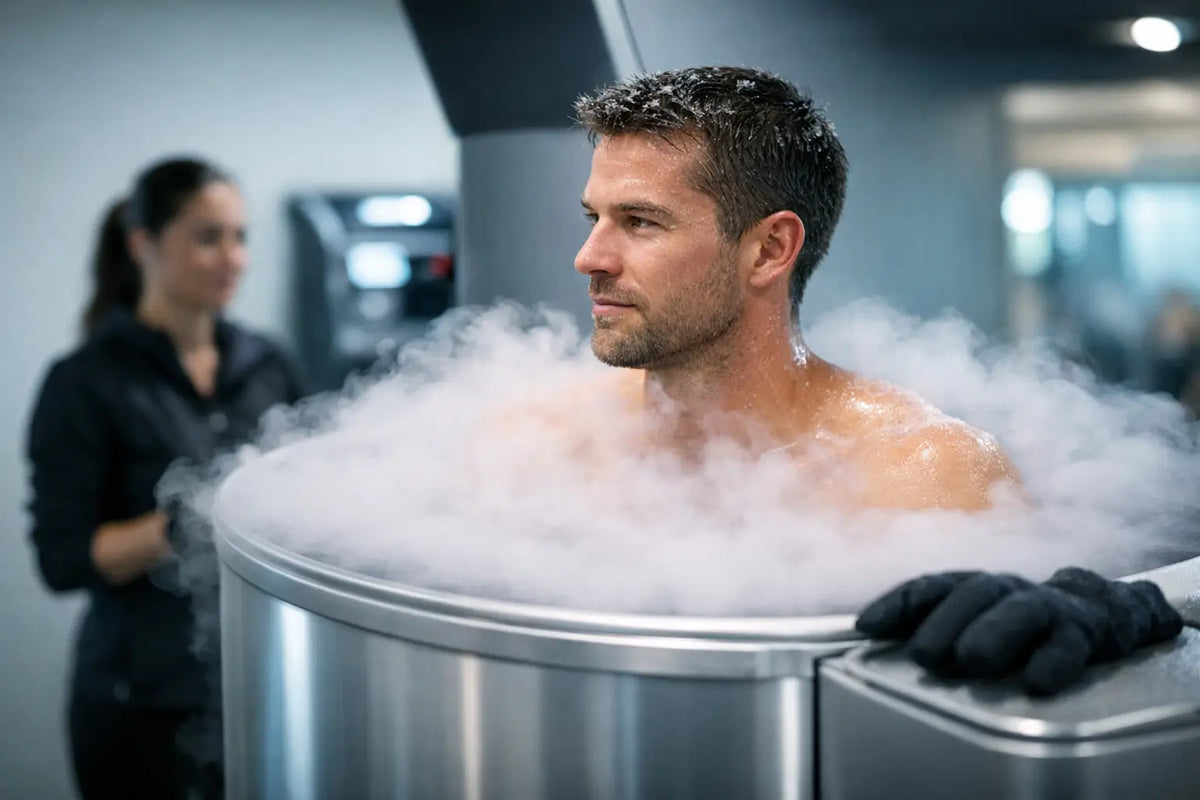
Whole-body cryotherapy involves extremely cold, dry air for a short, controlled exposure. Equipment protocols vary by manufacturer and facility, but sessions are commonly brief, often around two to three minutes. More is not better. The goal is a well-managed stimulus, delivered with quality equipment, trained guidance, and respect for individual tolerance.
Before a session, arrive dry, remove metal jewelry, and wear the protective items required by the system, typically including gloves, socks or slippers, and protection for sensitive areas. Avoid using lotions or moisture on the skin immediately beforehand. Move gently during the session, breathe steadily, and communicate if you feel unwell, overly uncomfortable, dizzy, numb, or short of breath.
Afterward, allow your body to rewarm naturally with light movement. Hydrate, eat according to your training plan, and avoid mistaking the temporary feeling of freshness for complete recovery. Your muscles still need fuel, sleep, and sensible loading.
Safety Is Part of the Luxury Standard
Cryotherapy is not appropriate for everyone. Athletes with uncontrolled high blood pressure, significant cardiovascular disease, poor circulation, cold-related conditions, Raynaud’s phenomenon, neuropathy, open wounds, or certain respiratory concerns should seek medical guidance before using it. Pregnancy, recent illness, and acute injury also warrant a conversation with a qualified clinician.
Do not use cryotherapy while impaired by alcohol or recreational drugs, and do not treat it as a way to push through sharp pain, suspected concussion, serious swelling, or an injury that requires assessment. Cold exposure can reduce the perception of discomfort without resolving its cause. Persistent or worsening pain deserves professional evaluation.
The same discernment applies to equipment selection. A premium cryotherapy installation should prioritize reliable controls, appropriate safety features, ventilation requirements, and thoughtful installation planning. For residential and commercial recovery environments, choosing professional-grade cryotherapy equipment can help create a space that balances performance, safety, and design. For residential and commercial recovery environments, choosing professional-grade cryotherapy equipment can help create a space that balances performance, safety, and design. For residential and commercial projects, Luxe Vida Wellness approaches the experience as a complete performance space, with thoughtful sourcing and coordination that honor both aesthetics and operational confidence.
Make the Cold Session Part of a Larger Ritual
Cryotherapy works best when it has a clear place in the recovery sequence. After a demanding day, an athlete might begin with hydration and a protein-rich meal, use cryotherapy for a brief cold reset, then transition into mobility work, compression, or a restorative sauna session later when appropriate. The exact order depends on the athlete, the training goal, and personal preference, but the principle remains the same: each modality should serve a purpose.
There is elegance in that level of intention. Recovery is no longer something squeezed into the margins after performance has taken everything. It becomes a protected standard, designed to help strength and serenity exist in harmony.
Use cryotherapy when the next performance is near, soreness is a genuine barrier, and a controlled cold session supports your broader plan. Then step back into your day with the calm confidence of an athlete whose recovery environment is built to meet the ambition of the work.