Wellness Real Estate Trends Shaping Luxury Homes
A luxury residence is no longer defined only by its kitchen, views, or square footage. It is defined by how well it supports the person living inside it after a demanding flight, an early training session, or a week of high-stakes decisions. Wellness real estate trends are making recovery, sleep, circulation, and calm part of the property itself - not an afterthought stored in a spare bedroom.
For discerning homeowners and forward-thinking developers, this shift is more than an amenity race. A thoughtfully designed wellness environment creates a private ritual that removes friction from healthy habits. When the sauna, cold plunge, red light therapy, or massage chair is steps away, restoration becomes part of the architecture of daily life.
Wellness Real Estate Trends Are Becoming a Value Signal
The strongest luxury properties have always anticipated how people want to live. Today, that means giving residents and guests greater control over their physical and mental environment. Private recovery spaces answer a clear demand: high performers want premium wellness access without scheduling around a spa, sharing equipment at a gym, or leaving home when they need to reset.
This is changing the language of premium real estate. Fitness rooms are evolving into recovery suites. Primary bathrooms are becoming personal bathhouses. Rooftop amenities and hospitality spas are being programmed around contrast therapy, light, heat, quiet, and restoration rather than a single conventional treatment menu.
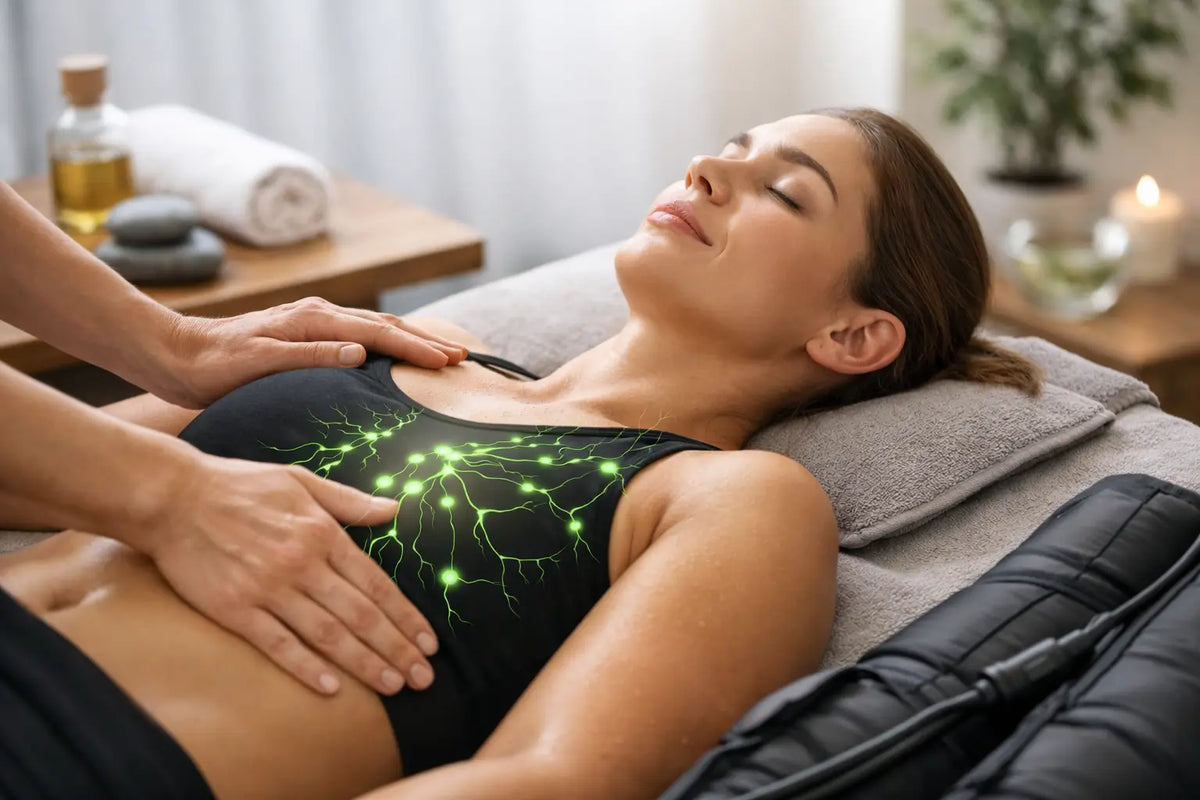
The appeal is practical as well as emotional. A well-specified wellness room can support post-training recovery, relaxation before sleep, circulation, stress management, and an elevated sense of ritual. It also gives a home or commercial property a distinct identity in a market where polished finishes alone no longer create a lasting advantage.
Recovery Suites Replace the One-Note Home Gym
The home gym is not disappearing. It is becoming part of a more complete performance ecosystem. A cardio machine and free weights address exertion; a recovery suite addresses what happens next. The most compelling spaces pair movement with modalities that encourage a deliberate transition out of effort.
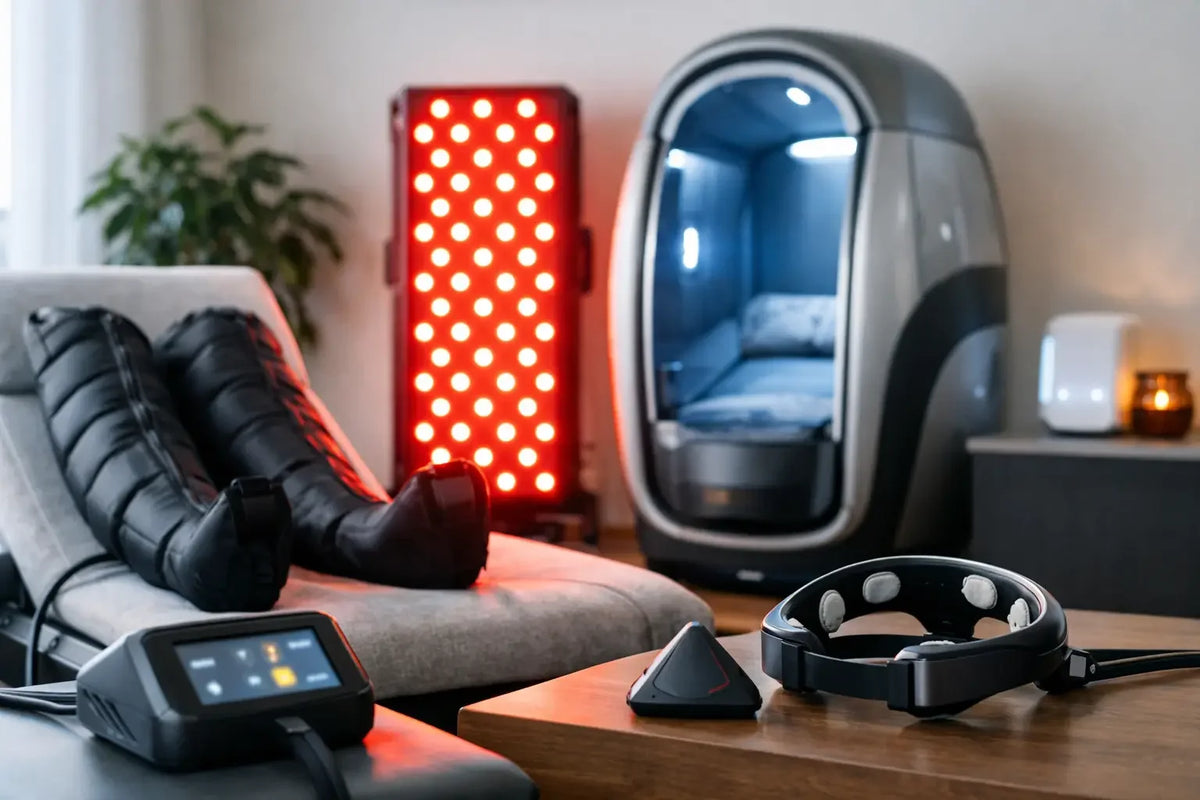
A common configuration includes an infrared or traditional sauna, a cold plunge, red light therapy, compression boots, and a premium massage chair. For larger estates or performance-focused clubs, whole-body cryotherapy, PEMF equipment, infrared cardio, and dedicated longevity capsules can create a more expansive experience. The right mix depends on the client, not a checklist. A serious endurance athlete may prioritize contrast therapy and compression, while an executive household may value infrared heat, massage, and a quiet light-therapy ritual.
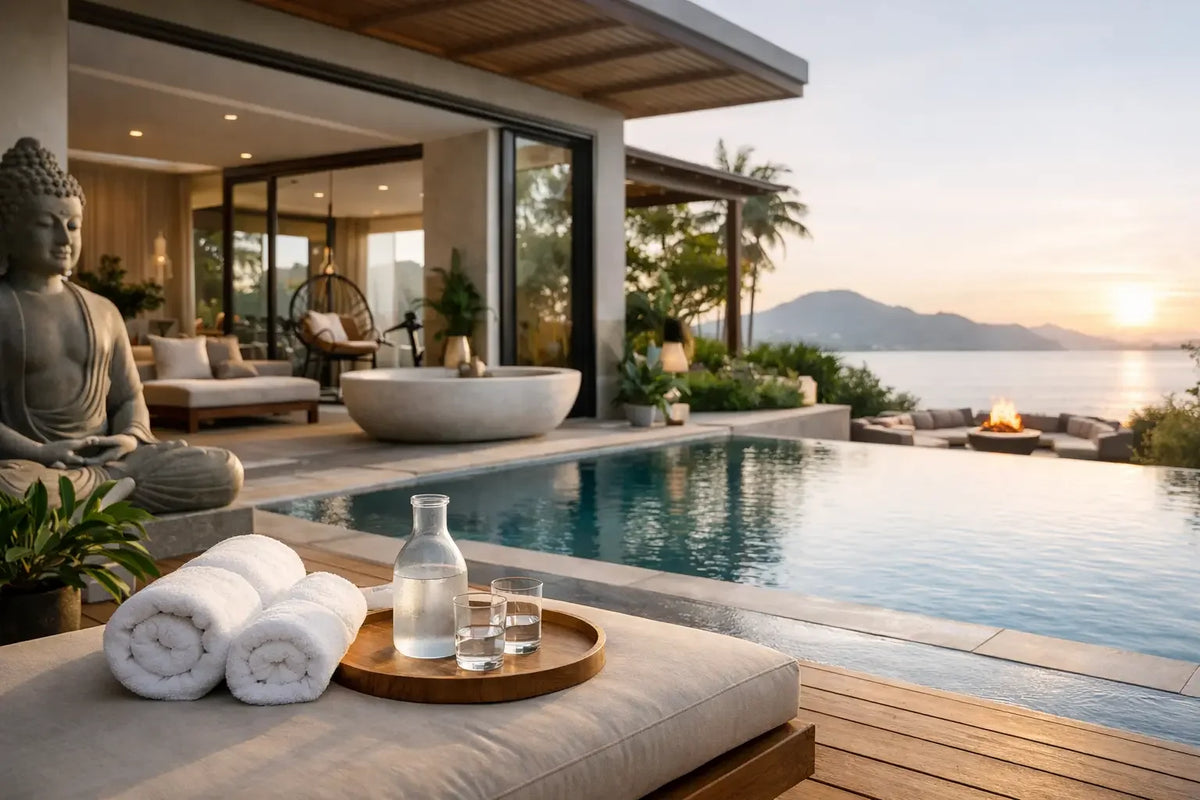
Design matters as much as equipment selection. The room should feel composed, not clinical. Natural stone, warm woods, acoustic control, dimmable lighting, towel storage, hydration stations, and clear transitions between wet and dry zones make the experience feel intentional. Strength and serenity exist in harmony when performance equipment is specified with the same care as custom millwork.
The Primary Suite Is Becoming a Private Retreat
Another defining movement is the expansion of wellness into the primary suite. Rather than treating recovery as a separate destination elsewhere in the home, homeowners are building intimate spaces that support the beginning and end of the day.
A compact infrared sauna adjacent to the bath, a red light panel in a dressing area, or a massage chair in a private sitting room can be more valuable than a larger but rarely used amenity room. Convenience drives consistency. The most successful installation is often the one that fits naturally into an existing routine.
This approach requires restraint. Not every primary suite needs every modality, and overfilling a room can compromise both circulation and atmosphere. A focused two- or three-piece sanctuary often delivers more daily value than an ambitious collection of equipment without adequate space, ventilation, or privacy.
Wellness Real Estate Trends Favor Intentional Infrastructure
The visual appeal of a recovery room gets attention, but infrastructure determines whether it performs beautifully for years. A cold plunge may require drainage planning, water access, floor protection, and service clearance. Saunas need appropriate electrical capacity, ventilation considerations, and a layout that respects surrounding finishes. Cryotherapy chambers and larger commercial systems require an even more detailed review of power, access, operating protocols, and site conditions.
These requirements should be discussed early, ideally before walls are closed and finish selections are final. Retrofitting is possible, but it can involve trade-offs in placement, electrical work, plumbing, freight access, and construction cost. New construction and major renovations offer the greatest freedom to create a fully integrated wellness sanctuary.
For developers, hotels, spas, and multifamily teams, the operational plan matters just as much. Equipment selection should account for expected utilization, cleaning procedures, guest flow, staff training, warranty support, and the level of supervision appropriate to each modality. A striking amenity that is difficult to maintain will not sustain its value. World-class hospitality depends on reliability behind the scenes.
Hospitality Is Selling Restoration, Not Just Accommodation
Luxury hospitality has helped accelerate these expectations. Guests increasingly look for spaces that offer a genuine reset: a thermal circuit after a long day of travel, a red light session before dinner, or a private recovery ritual following a mountain, golf, or city itinerary.
The opportunity is not limited to destination spas. Boutique hotels can create a memorable identity with a compact but exceptionally executed wellness suite. High-end residential developments can differentiate shared amenities with bookable recovery rooms and thoughtful programming. Athletic facilities can build loyalty by making recovery as visible as training.
The most effective projects do not scatter equipment across a large amenity floor. They create a coherent journey. Arrival space, changing area, treatment or recovery zone, hydration, seating, and a calm exit sequence should work together. That level of consideration signals quality before a guest even turns on a sauna.
Design for Use, Privacy, and Longevity
Wellness features create value when they are used often, safely, and comfortably. That begins with an honest assessment of who will use the space and when. A family with varied schedules may need separate zones or simple controls. A residence designed for entertaining may benefit from a social sauna and contrast-therapy area, while a privacy-focused buyer may prefer a secluded recovery room near the primary suite.
Material choices should support the experience. Slip-resistant flooring, moisture-tolerant finishes, easy-clean surfaces, comfortable seating, and durable storage are not secondary details. Neither is sound control. A massage chair or treadmill placed beside a tranquil reading room may undermine the very calm the home is meant to create.
Not every market is chasing the same wellness footprint. Some buyers want a fully built-out suite from day one; others prefer flexible infrastructure — the plumbing, power, and layout already in place — so a future owner can adapt the room to their own routine. That flexibility is itself becoming part of what luxury buyers expect, rather than a fixed checklist of equipment. The goal is not to chase every trend. It is to create an environment that feels inevitable for the property and its residents.
For projects that demand a complete vision, Luxe Vida Wellness helps bring together curated equipment, custom specifications, commercial sourcing, delivery coordination, and installation support. That integrated approach protects both the design intent and the client experience from first layout discussion through final setup.
The next standard of luxury is not simply having more space. It is having a space that gives something back. Build the room that makes restoration easy to choose, then let that daily ritual become one of the most valuable features of the property.
Planning a wellness space for your next build or renovation? Luxe Vida Wellness works with homeowners, developers, and hospitality teams to specify, source, and install recovery suites tailored to the property — from a single primary-suite sauna to a full multi-modality wellness floor. Request a quote to start the conversation before your finishes are locked in.